FLOWER POWER | SERIES 002: DEMEKA BECHA, ETHIOPIA
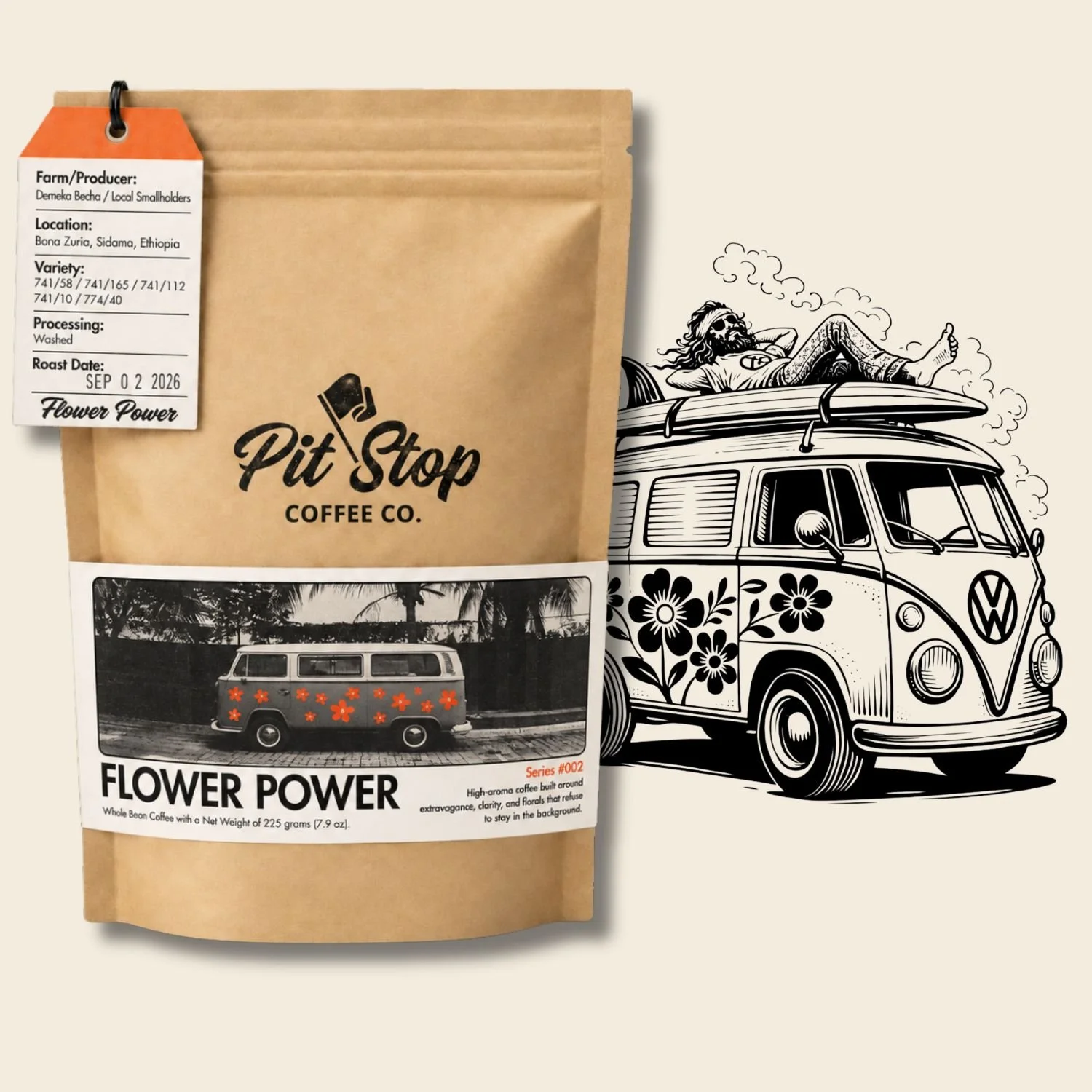
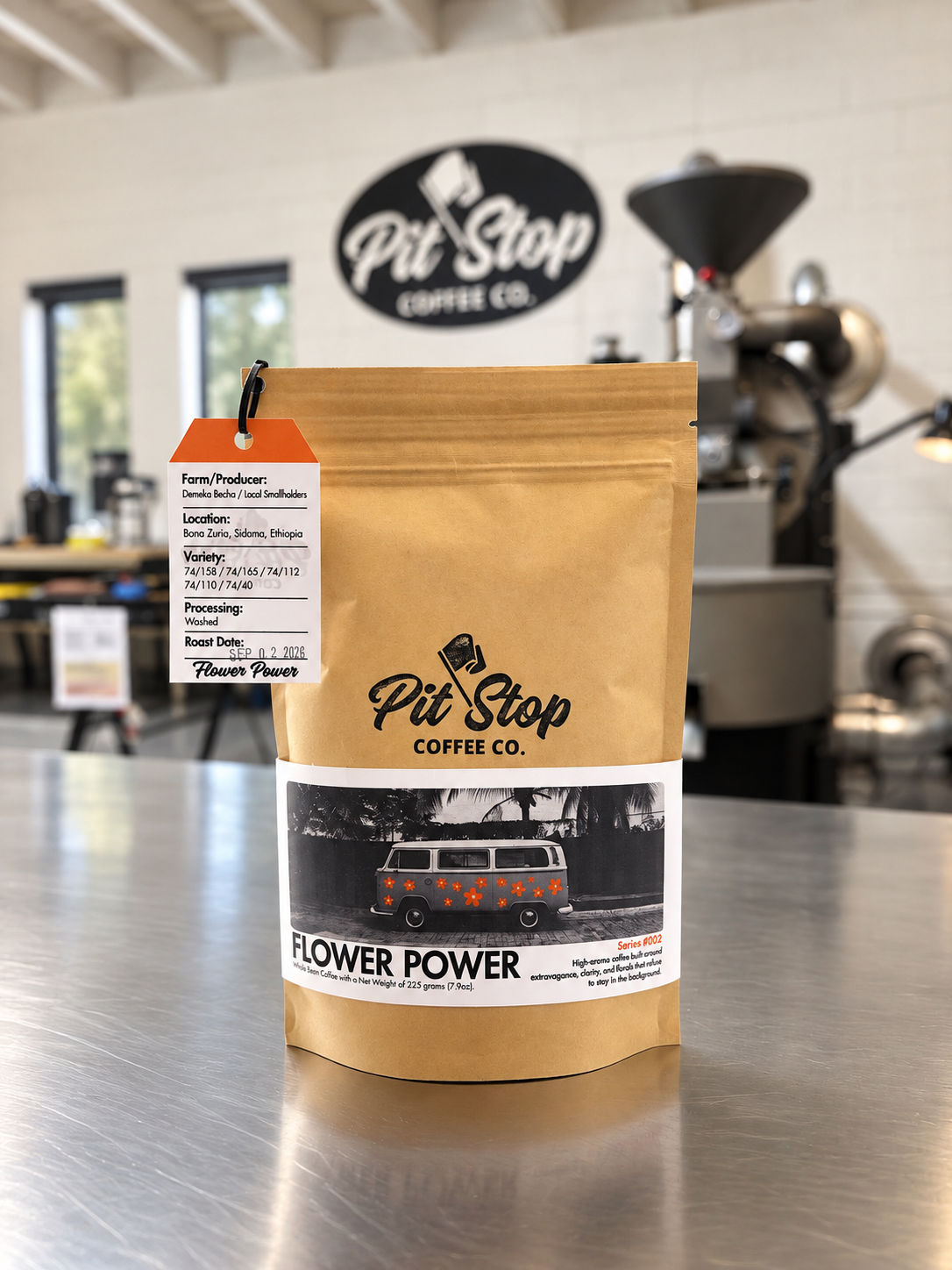
FLOWER POWER | SERIES 002: DEMEKA BECHA, ETHIOPIA
INTRODUCING SERIES 002
Flower Power is our year-round floral offering, built around the kind of aromatics that turn heads when you smell the dry grounds or bloom the coffee. This is coffee for people who love floral fragrance. It is not loud just for the sake of being loud, and it is not overly tropical and fruity in a crazy way like our Tikis & Hot Rods series.
Floral coffee is easy to oversell and surprisingly hard to actually deliver. These delicate aromatics can disappear in so many places along the way, from green coffee quality and storage to packaging, roasting, brewing, and oxidation. Everything we have learned about handling coffees like this is basically built into Flower Power’s DNA.
Series 001 made the case that Brazil could produce this kind of floral character, and it absolutely could when the right variety was involved. Series 002 takes us to the place that helped set the expectation for floral coffee in the first place: Ethiopia.
Washed Ethiopia has become one of the reference points for floral coffee, but just putting “Ethiopia” on a bag does not tell you much. We want to know where the coffee came from, who handled it, how it was processed, and why any of that might matter to what you are tasting.
WHERE THIS COFFEE IS FROM
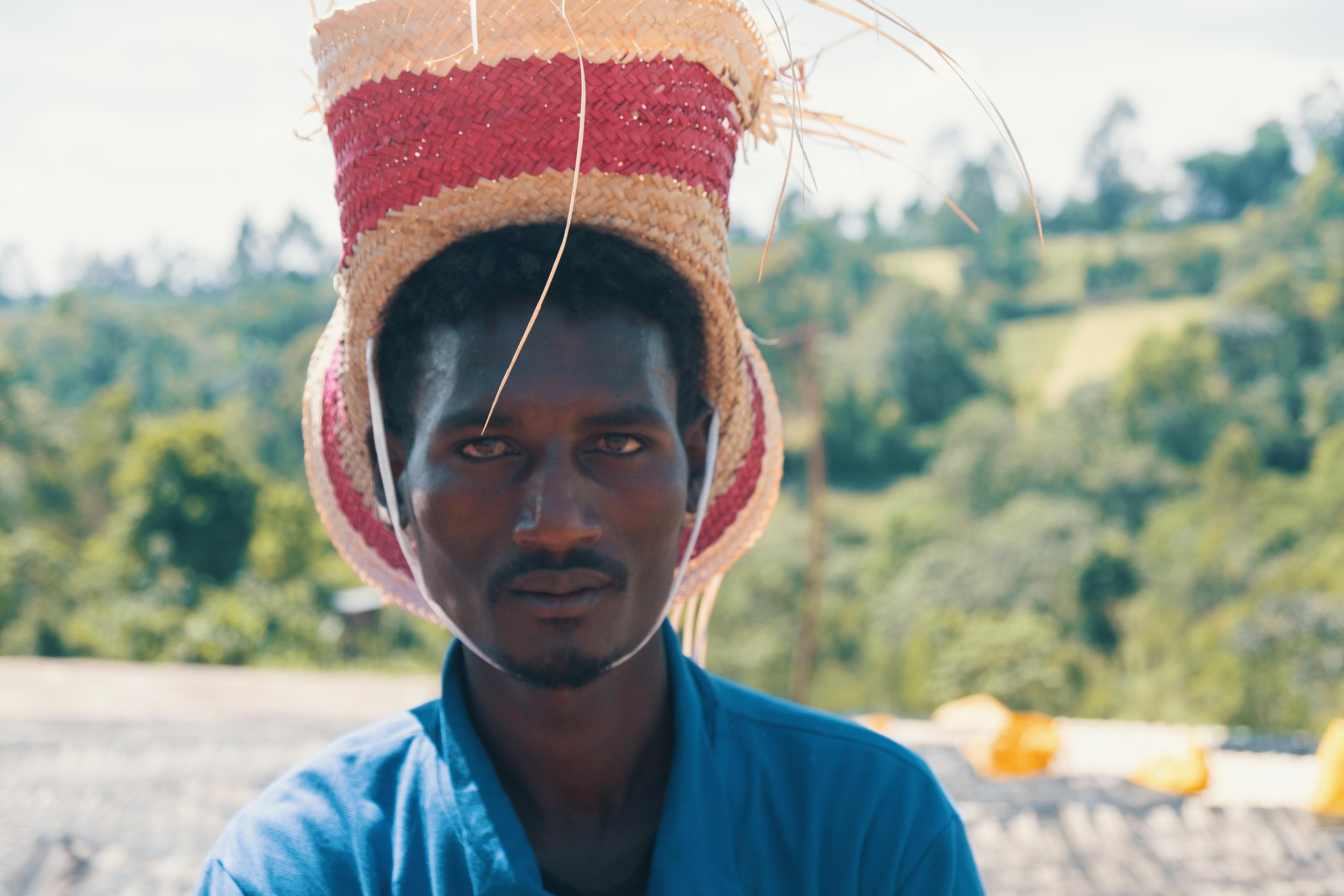
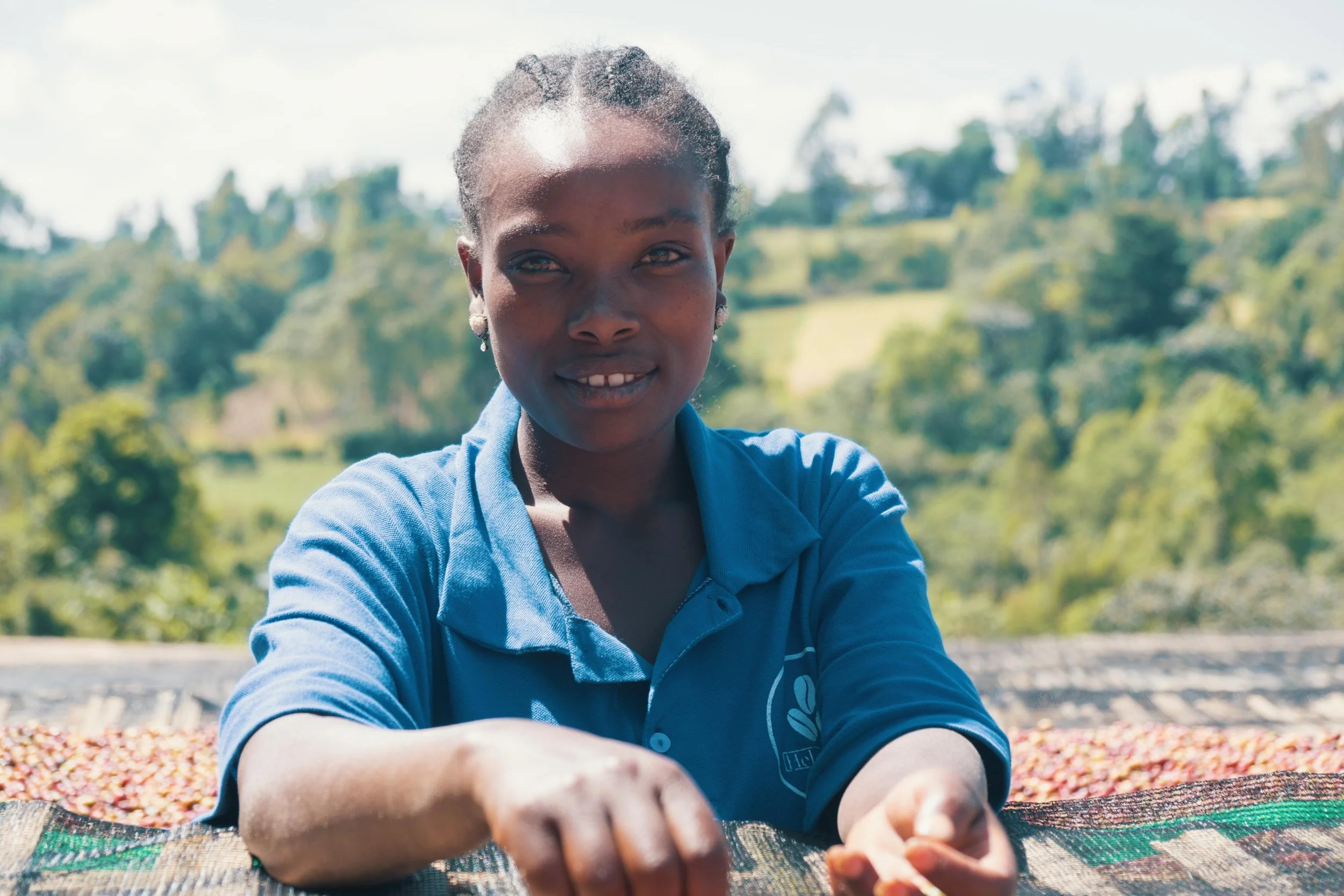
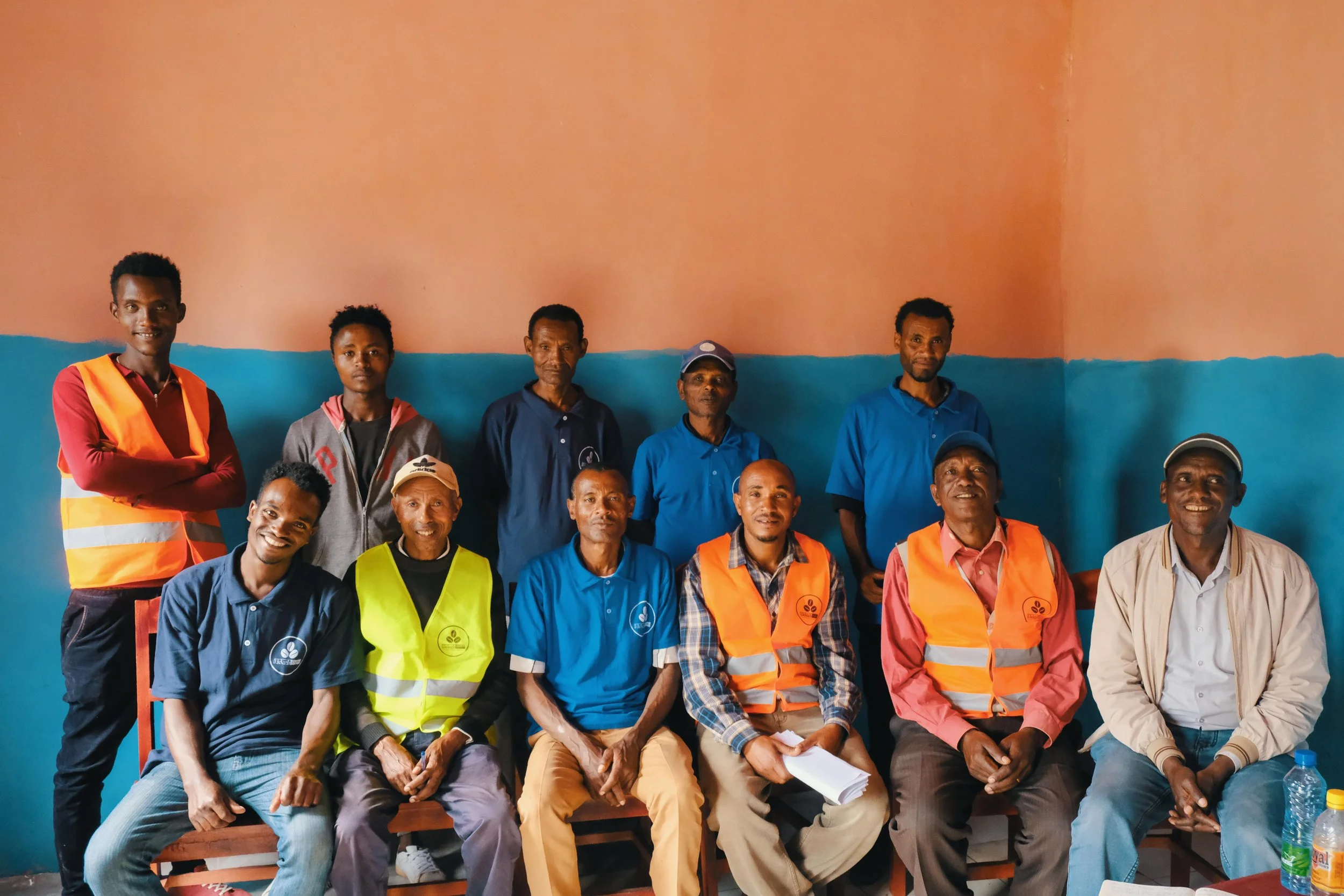
This coffee comes from Becha Village in the Bona Zuria district of Sidama, from a site owned by Ayele Tulu and managed by his son, Tsegab Ayele.
We can even give you the coordinates: N6° 32.804’ E38° 42.887’.
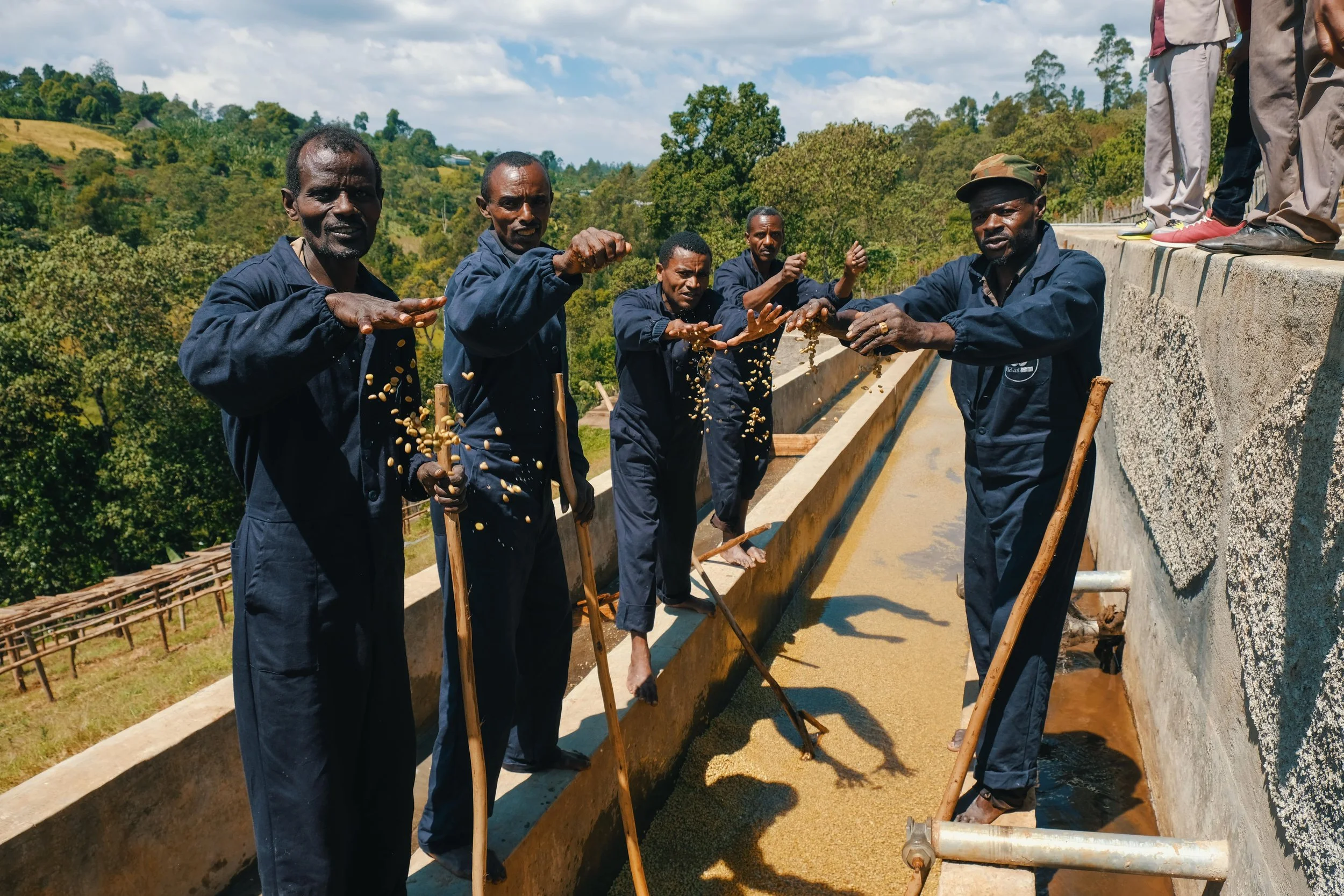
The processing station sits on top of a hill at roughly 2,155 meters, or a whopping 7,070 feet above sea level, on "loamy clay soil (loamy refers to a nutrient rich blend of sand, silt, and clay). A lot of the farmers around the station are what are often called garden farmers. They grow coffee on very small plots around their homes and bring ripe coffee cherries to the station, where the coffee is sorted, processed, fermented, washed, dried, and eventually prepared for export.
Obviously, we go nuts for information and education because we want you guys to get stoked about the craft behind this stuff too. We love when a single-origin coffee is traceable enough that we can understand not just the country or region, but the actual site, the people, and the decisions that helped shape the coffee.
What makes this release even cooler is that our current Tikis & Hot Rods comes from the same site. Same hill, same family, similar varieties, but a completely different processing method and a completely different cup.
WHAT TO EXPECT
Lemon Sugar • White Peach • White Florals • White tea
This is a coffee you smell before you taste. When you grind it, the aroma opens up with lemon balm, white florals, and soft stone fruit. In the cup, we get lemon sugar, white peach, white tea, and a really clean lemonade-like brightness.
It is bright and delicate, but not thin. The whole point of Flower Power is fragrance, sweetness, clarity, and lift, and this coffee hits all of those things.
It is also one of those coffees that becomes more interesting as it cools. The aromatics become easier to separate, the sweetness gets clearer, and flavors that initially sit on top of each other start pulling apart into their own little moments as the cup gets colder.
That is something we like to call complexity.
GIVE THIS ONE SOME TIME
Light-roasted floral coffees can change a lot as they rest. During the first week, this coffee is usually already tasting great, with plenty of fragrance, fruit, and floral character. During weeks two and three, it may get quieter for a little while. Do not panic if that happens. Coffees like this can go through a weird muted phase where it feels like some of the aromatics disappeared.
Around day 30 to 40 and beyond is where we expect the coffee to really start showing its full potential. We have worked with coffees like this for years, and one of the biggest lessons has been to stop judging them too early. If yours gets quiet after a couple of weeks, seriously, just give it more time.
For storage, keep the bag sealed tightly and push excess air out before closing it back up. IT also helps to retain as much CO2 as possible and scoop the beans out of the upright bag. The main goal is simply to limit how much fresh oxygen gets introduced while the coffee rests.
This is where things get really fun. Flower Power has a sibling in our current lineup.
Tikis & Hot Rods comes from the same site, with the same owner, varieties, soil, and elevation. The major difference is what happens during processing.
Flower Power is washed, meaning the fruit is removed and the coffee is fermented, cleaned, soaked, and then dried. That gives us the lemon sugar, white peach, white tea, florals, clarity, and lift we love in this coffee.
Tikis & Hot Rods takes essentially the same raw material in a completely different direction through a black honey process that leaves much more of the fruit involved during drying. The result is dramatically different, with the cup moving toward things like passionfruit gummy, watermelon candy, and much heavier fruit character.
Same hill. Same family. Same varieties. Two very different coffees.
If you have ever wondered how much of a coffee’s flavor comes from where it was grown versus what happens in the days immediately after picking, save a little Flower Power and drink these two next to each other. We put them in the lineup together on purpose because you almost never get such a clean opportunity to taste how dramatically processing can change the same basic coffee.
-
Origin: Becha Village, Bona Zuria, Sidama, Ethiopia
Producer: Ayele Tulu
Site Manager: Tsegab Ayele
Varieties: 74/158, 74/165, 74/112, 74/110, 74/40
Process: Washed
Fermentation: 24–72 hours
Soak: 6–12 hours
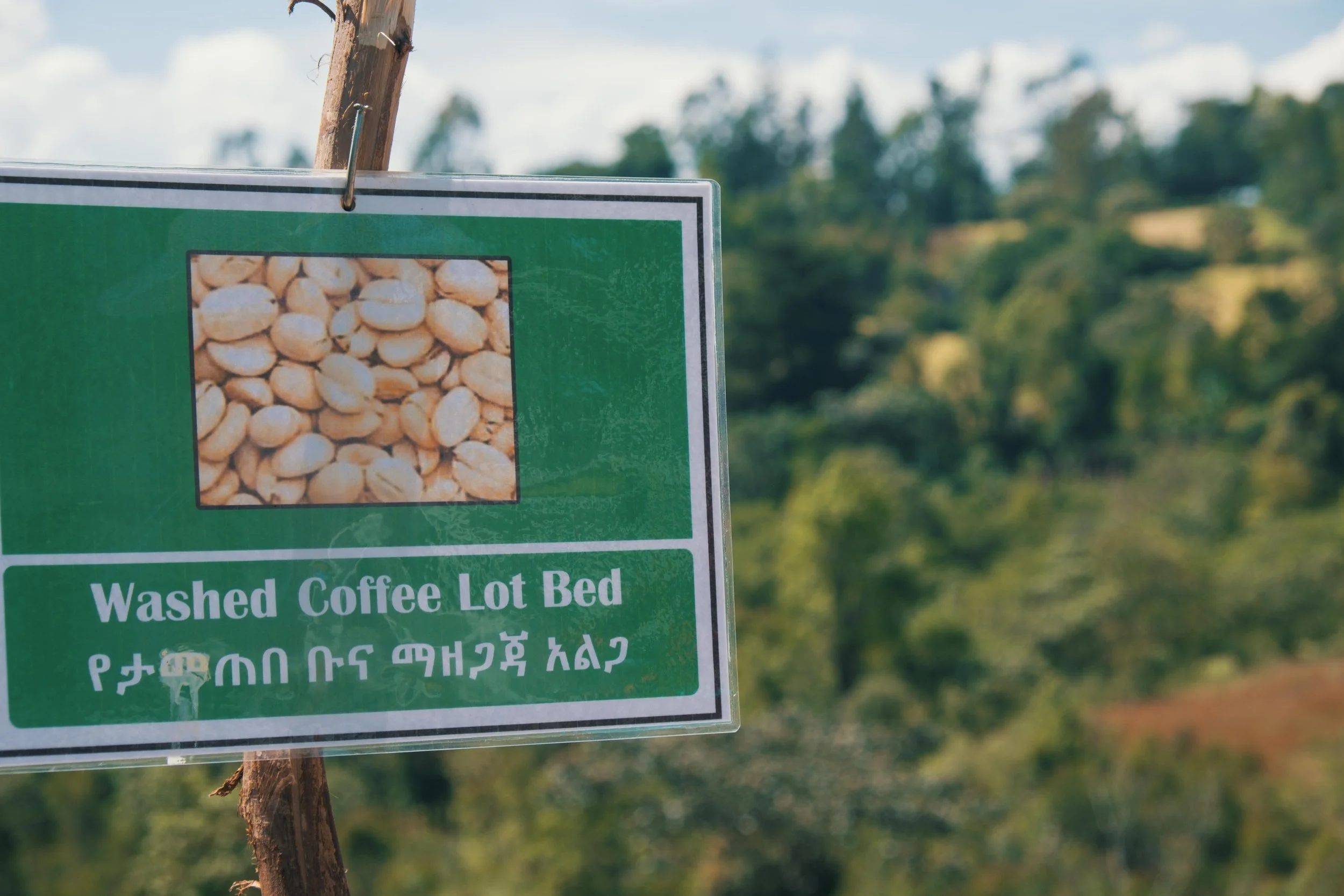
Drying: 9–11 days on raised mesh beds
Altitude: 2,100–2,200 MASL, with the site sitting around 2,155 meters / 7,070 feet
Soil: Loamy clay
Roast: Light
Washing Station Coordinates: N6° 32.804’ E38° 42.887’
Importer: Swift Coffee Sourcing (Previously Catalyst Trade)
-
Brewing Difficulty: 2 / 3
This coffee is not difficult to brew, but it does reward some attention, especially if it’s not rested for more than a month post roast.
Ethiopian coffees tend to produce more fines during grinding than many other origins, which can slow drawdown and push extraction higher than expected.
A good place to start:
Coffee: 22g
Water: 366g
Water Temperature: Down drift temperature from 208 to 203°F
Ratio: 1:16.6
Grind Size/Target Brew Time: Coarsest grind and Longest brew time of your dialed-in spectrumUse that as a starting point rather than a rule. Your grinder, brewer, water, and pouring style will all change how quickly the coffee extracts.
If the cup tastes flat or heavy, grind a little coarser. If it tastes thin, sour, or underdeveloped, grind finer.
Water matters a lot with coffees like this. Lighter mineral water can help bring out more florals and delicate aromatics. If your normal water makes the coffee feel muted, try blending it with distilled water and taste the difference.
We prefer a softer water profile of around 20-50 TDS, though these coffees can taste amazing with water that’s much harder as long as the alkalinity is controlled and not too high.
Milk Compatibility: 2 / 3
Flower Power can make beautiful milk-based espresso drinks, but too much milk can cover the florals quickly.
For filter coffee, if you like adding milk, try brewing slightly stronger with less water rather than pouring a large amount of milk into a normally brewed cup.
-
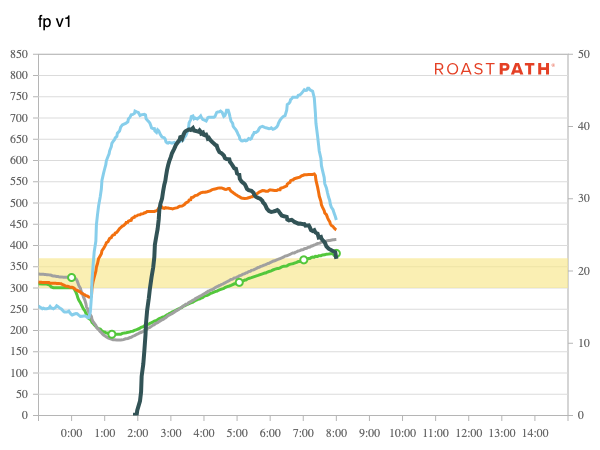
The goal with this coffee is not chocolate or heavy roast character. We are chasing fragrance, sweetness, clarity, and lift.
Coffee grown around 2,155 meters is dense, and these particular Ethiopian varieties also run very small in screen size. That changes the way the coffee takes on heat and gives us a much smaller window between underdeveloped and flat. The florals are also some of the first things to disappear if you overshoot the roast, and depending on what is happening in the profile, even a few seconds can matter. Once those aromatics are gone, they certainly do not come back.
So we stop early and we stop precisely. We want the coffee expressive without becoming sharp, delicate without becoming thin, and floral without feeling fragile. It should reward someone who wants to really dial in their brewing, but it should not require a chemistry degree to make a good cup.
This style of roasting also tends to make coffees taste more intense and sweet when everything lines up correctly. It is one of the things we love about traditional drum roasting and having variable-speed airflow that we can control independently from heat input. We like having as many knobs to turn as possible because, well, we are coffee nerds and apparently cannot help ourselves.
-
If you love floral coffees, vibrant peachiness, expressive washed Ethiopians, or coffees from places like Sidama and Yirgacheffe, this is probably your lane. It is especially for people who love coffees you smell before you taste and cups that somehow seem to get more beautiful the longer they sit in front of you.
This is not really a coffee we would recommend drinking in three minutes while running out the door. Let it cool down, come back to it, and see what changes. That is where a lot of the fun is.
-
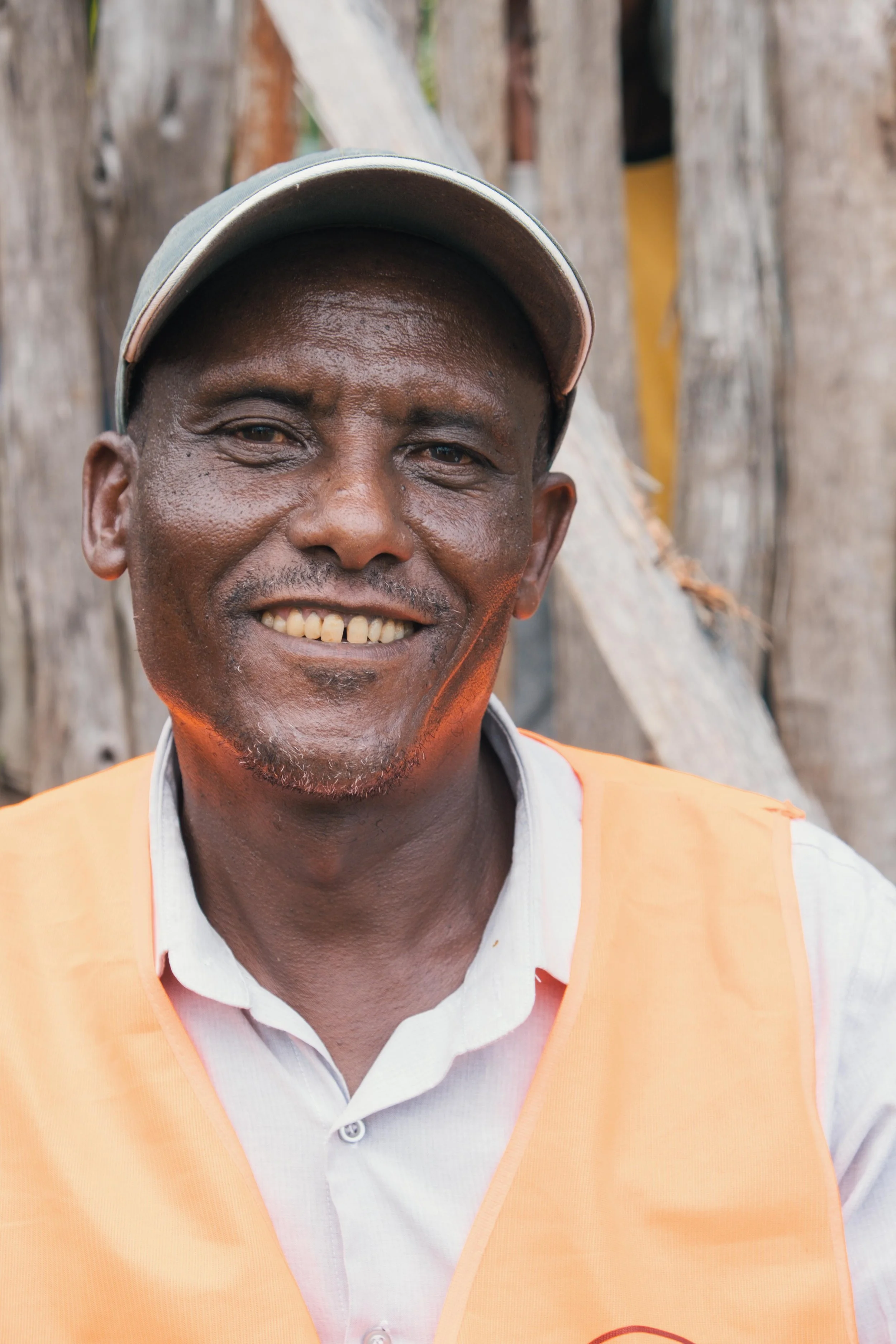
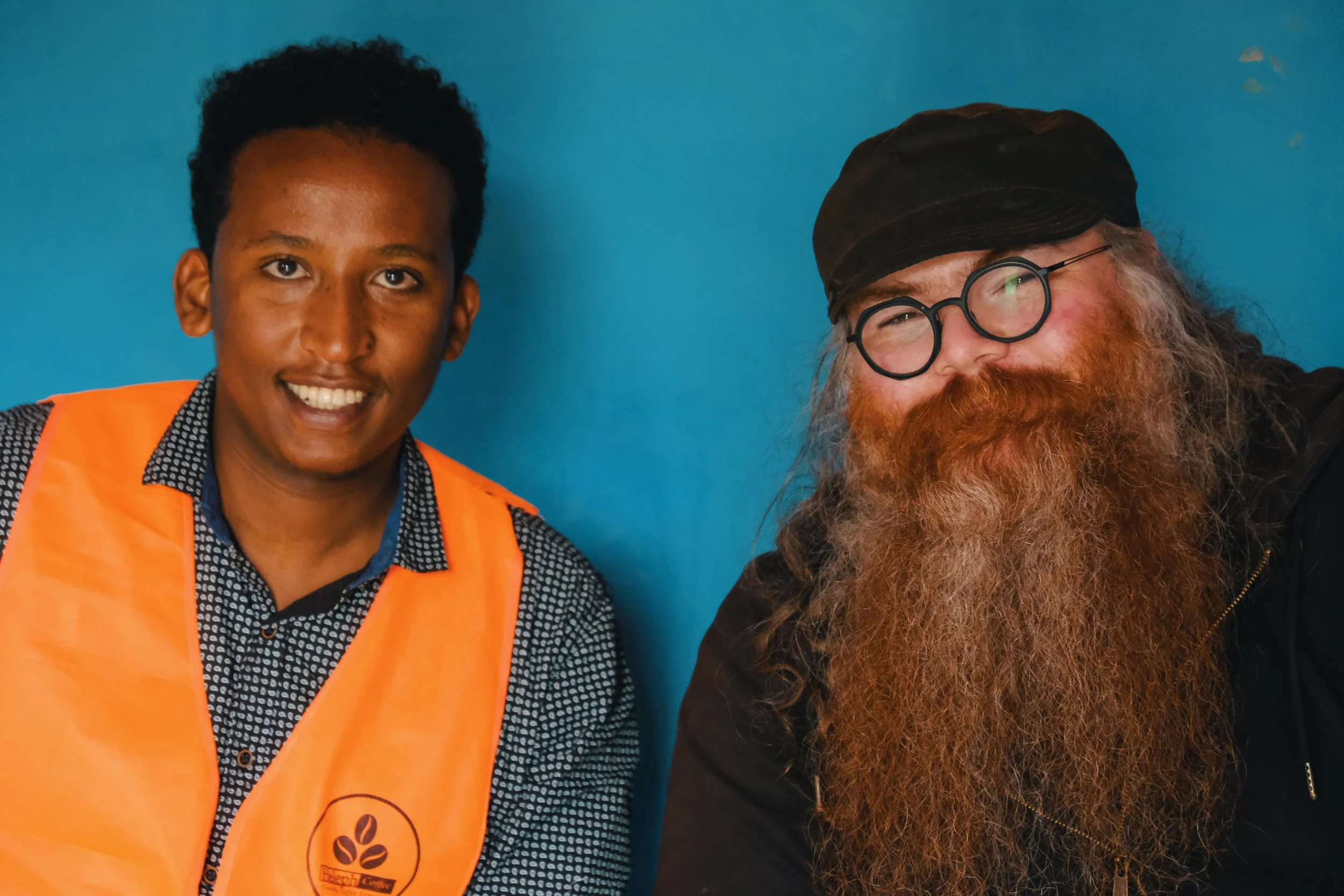
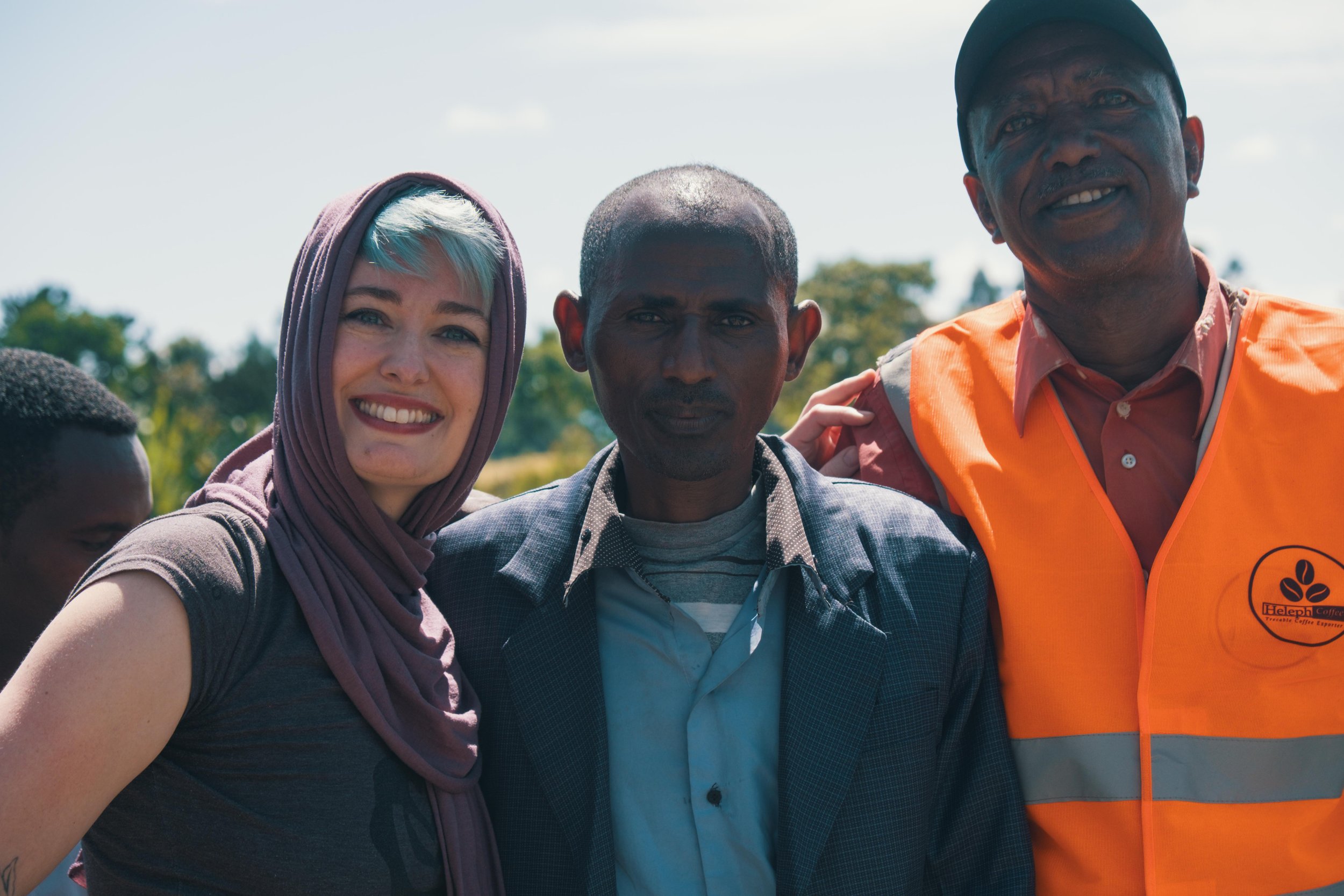
Ayele Tulu owns the Demeka Becha site and has spent his life in Bona Zuria. His son Tsegab manages the operation day to day, but by most accounts, the person who really keeps everything moving is Genet Haile Endeshow, Tsegab’s mother and Ayele’s wife.
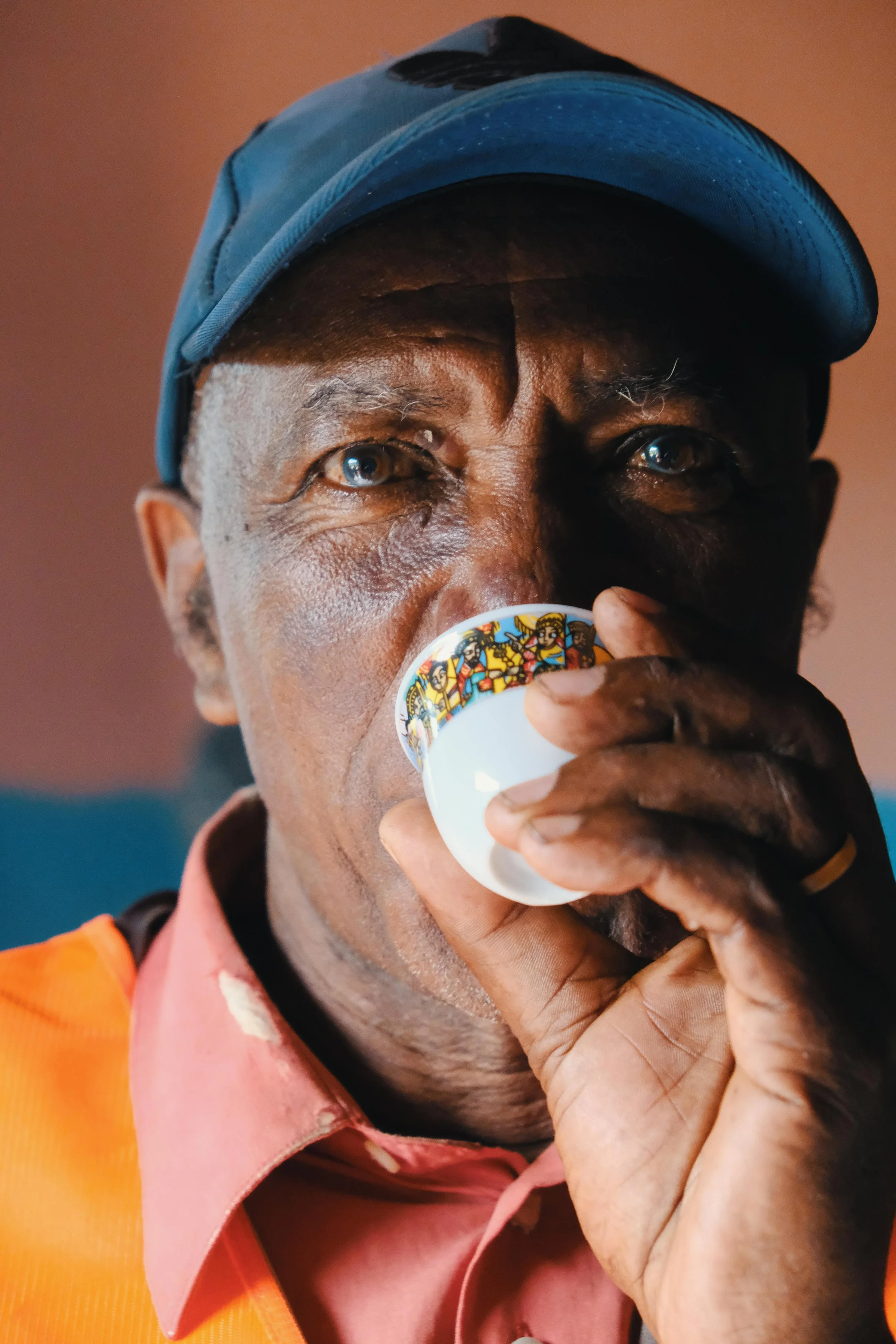
People who work with the family tend to mention the same thing: if you visit, you are going to get fed. Genet is known for making doro wat, a chicken stew traditionally served to honor a guest, followed by buna, coffee of course, on their porch shaded by flowering vines.
We like including details like this because they are the parts of a coffee farm that never fit neatly onto a spec sheet. Coffee is agricultural, but it is also incredibly human. The places that retain skilled people, pay attention to the work, and care about how people are treated are also the places capable of making thousands of small decisions correctly when harvest comes around.
There is obviously no way for us to fit an entire family, community, or culture onto the side of a coffee bag, but knowing a little more about the people behind the coffee makes the whole thing feel more connected. We hope it helps you appreciate what is in the cup a little more too.
-
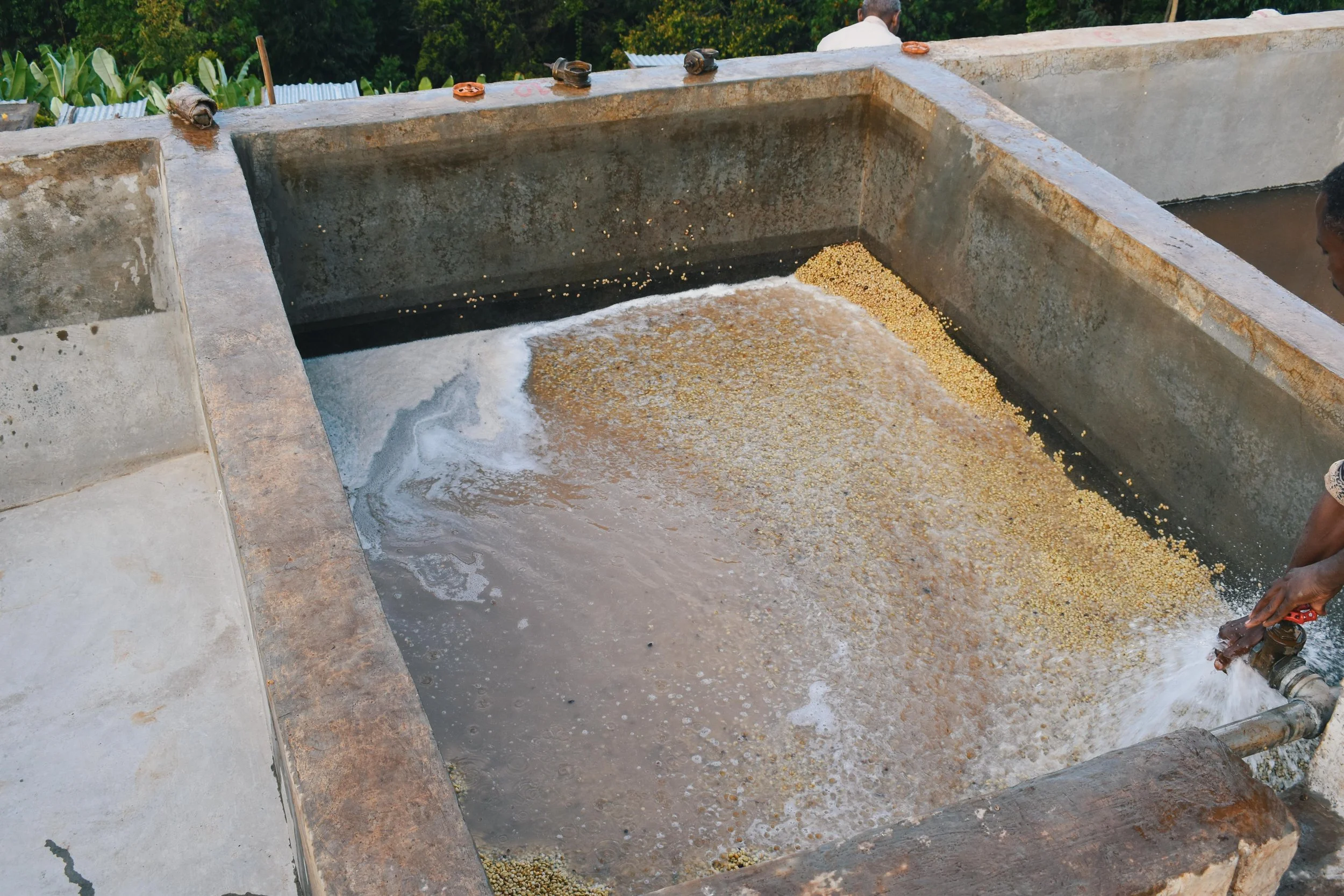
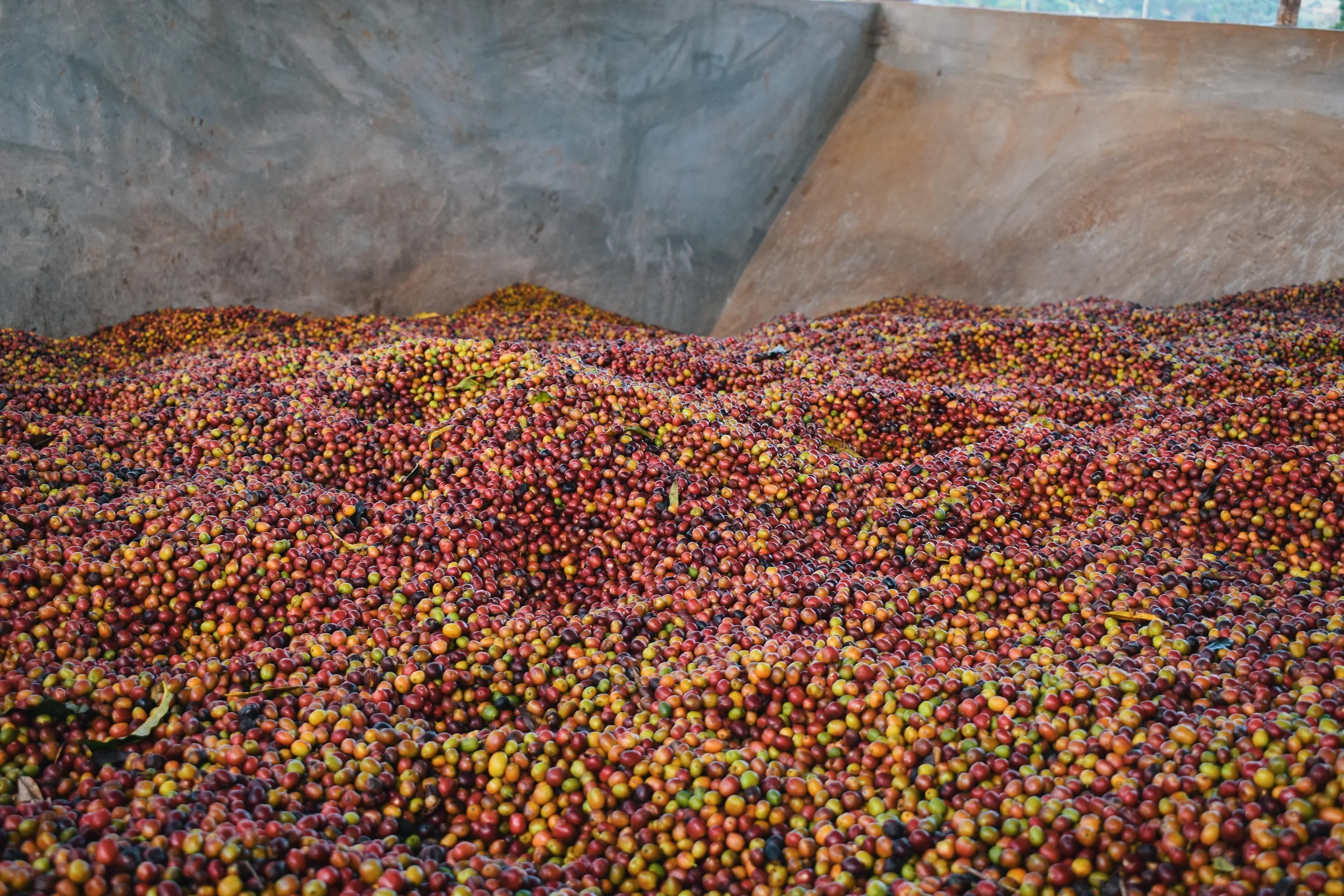
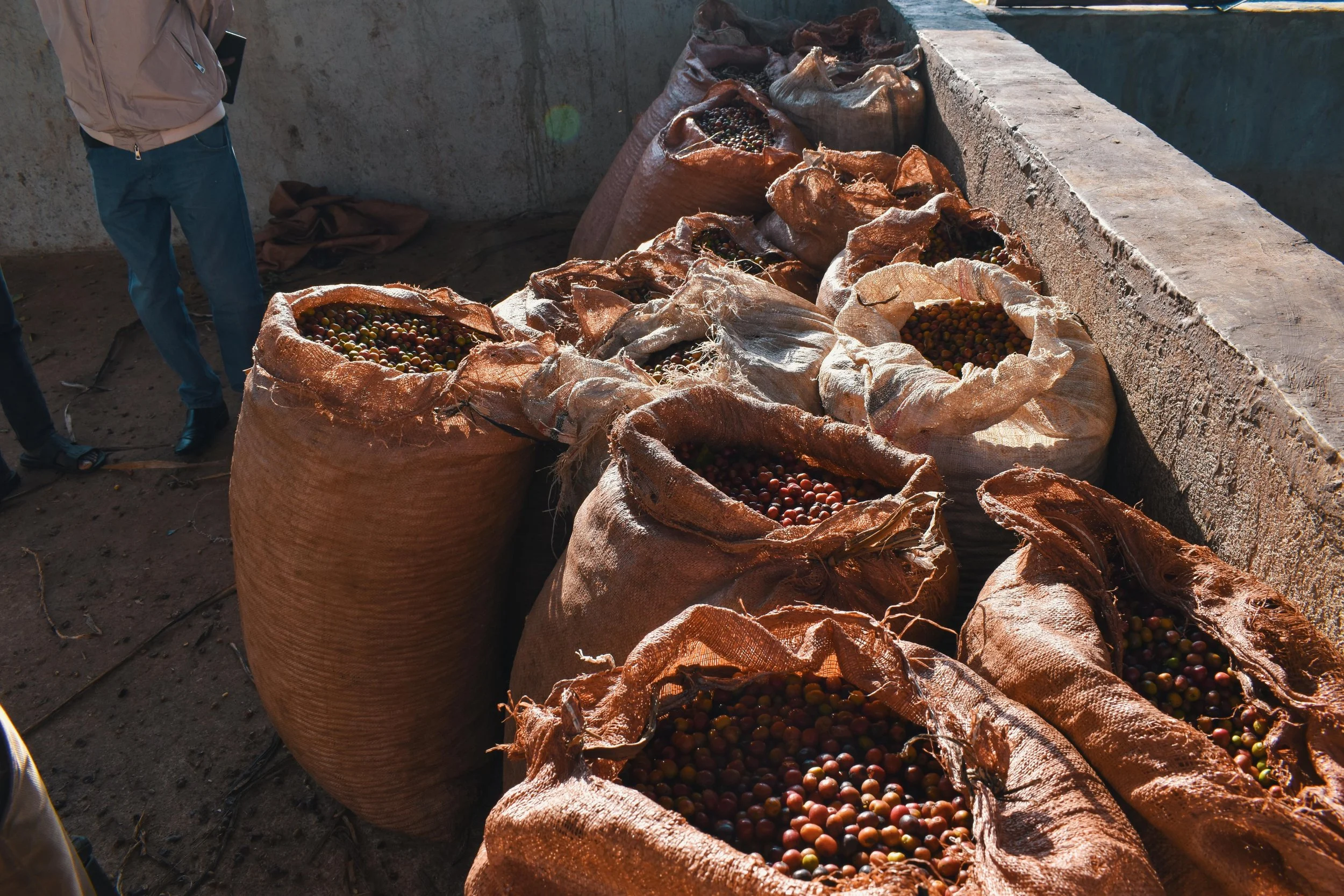
Smallholders, or garden farmers like we mentioned above, hand-pick ripe coffee cherry and deliver it to the station. The day’s intake is combined in the receiving hopper, pulped, and moved into fermentation tanks that hold roughly 10,000 kilograms of coffee.
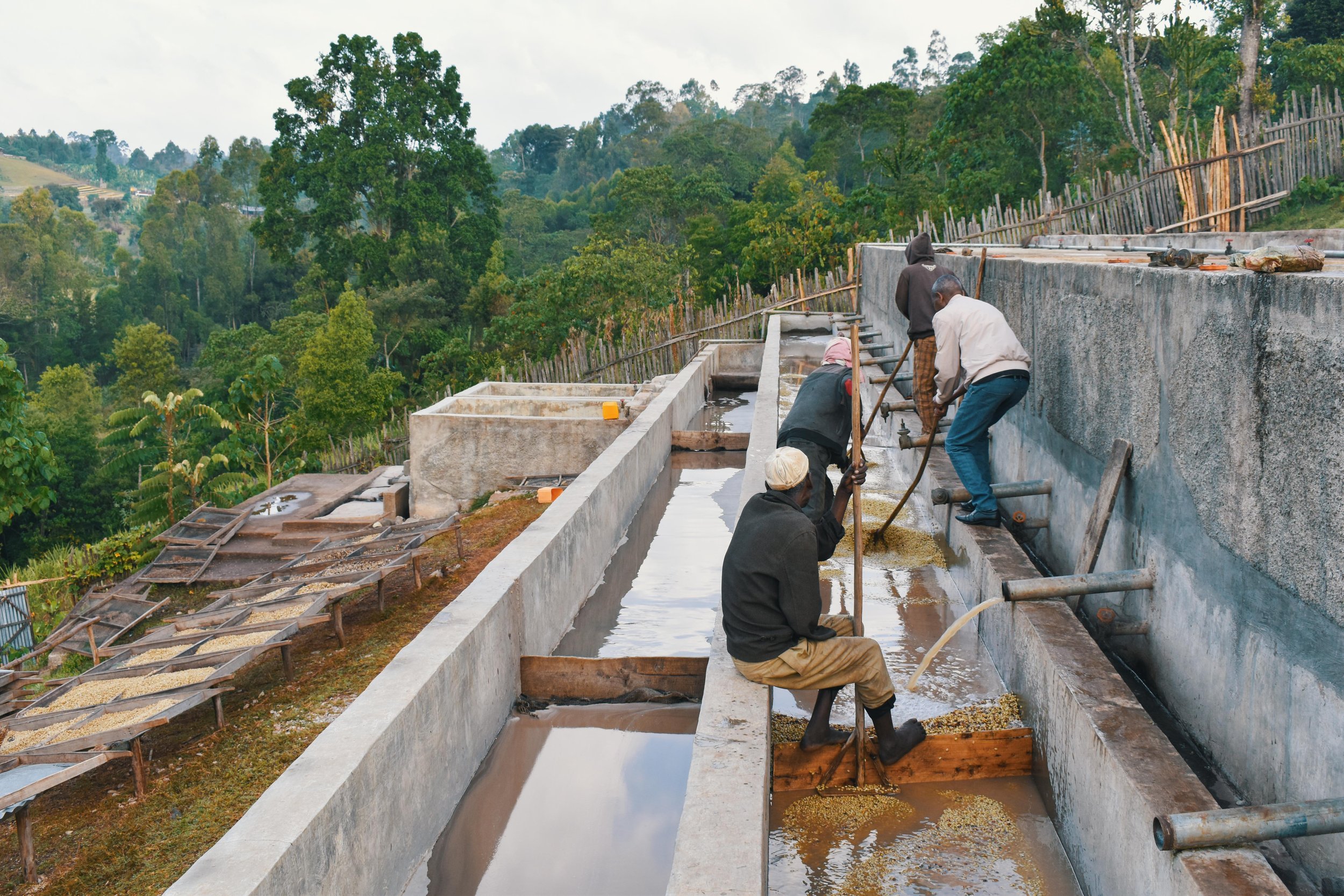
Fermentation lasts anywhere from 24 to 72 hours depending on temperature, elevation, and how the coffee is behaving. There is not simply a timer on the wall deciding when the process is finished. The team uses what is often called a shovel test, pulling a tool through the tank and feeling how the parchment moves against it. When the mucilage has loosened enough, fermentation is complete.
That sounds like a small detail, but it is actually one of the most consequential decisions in the entire washed process. It is judgment built through repetition. You can write a processing protocol on paper, but somebody still has to stand there and make the call when the coffee is actually ready.
After fermentation, the coffee moves through clean water channels and is worked with paddles and rakes until the remaining mucilage is removed. It then soaks in fresh water for another 6 to 12 hours before being moved onto raised mesh drying beds.
Drying takes roughly 9 to 11 days. The coffee is spread thin, turned and hand-sorted constantly, covered during the hottest part of the day, covered again overnight, and protected whenever rain moves through.
None of this is especially glamorous, and honestly, it reminds us a lot of roasting. People sometimes see production coffee roasting as this mysterious craft, but most of it is actually pretty streamlined and repetitive. You make a lot of small decisions, try to make them correctly over and over again, and then eventually get to taste the results.
That is one of the reasons we love it. You can make a tiny adjustment and actually taste what that decision did later. Processing coffee is obviously a completely different job, but the basic idea feels pretty familiar: a whole bunch of small, correct decisions in a row.
When all of those things line up, it can feel like pure magic.
-
Our importer’s founders have worked with this site since 2019 through war, COVID, major changes in the coffee market, and all of the ordinary difficulties that come with keeping an agricultural business alive. Their previous importing company, Catalyst Trade, eventually went out of business, and multiple harvests later they started again under Swift Coffee Sourcing. One of the things that stood out to us is that when they came back, they chose to return to many of the same producing partners.
That kind of relationship matters to us. Thousands of producers farm the land surrounding the Demeka Becha station, and the cherry delivered there is weighed, logged, and paid for by name.
We do not want to buy some vague idea of “Sidama” or “Ethiopia” without understanding where the coffee actually came from or whether the people producing it were properly accounted for. We want to know the hill. We want to know the family. We want to understand the processing protocol well enough that we can explain why the coffee tastes the way it does.
We can always do better when it comes to transparency, and there will probably always be another layer we want to understand. But this is the kind of sourcing that gets us excited because there is actually something meaningful to learn and share beyond a country name and a handful of tasting notes.
That is the same standard we brought to Flower Power in Brazil. Series 002 simply takes that idea somewhere new.
-
WHAT'S INSIDE A $21.50 BAG OF FLOWER POWER
We think it is pretty cool to know what actually goes into the price of a bag of coffee, because from the outside it can be easy to look at a $21.50 bag and wonder where that money goes. There is a surprisingly long chain between coffee growing on a hillside in Ethiopia and a finished 225 g bag sitting on your counter, so we wanted to show you the real numbers behind this one.
We purchased this washed Demeka Becha from Swift Coffee Sourcing for $6.93 per pound green. The original 60 kg sack contained about 132.3 pounds of coffee and cost us $916.67 before the additional warehouse, loadout, and freight costs required to get it to us. Coffee also does not weigh the same after we roast it. Flower Power loses about 12.4% of its weight during our roast, which takes that original 132.3 pounds down to roughly 115.9 pounds of roasted coffee.
We also set aside small samples from most roast batches for quality control. Between roast weight loss and the coffee held back for QC, a 60 kg sack gives us roughly 232 sellable 225 g bags, give or take a bag depending on how much we sample.
WHAT WE PAID, AND HOW FAR BACK WE CAN TRACE IT
Here is where the pricing gets more interesting. We paid Swift Coffee Sourcing $6.93 per pound for this coffee at the U.S. warehouse, and Swift was also able to give us the FOB price: $6.40 per pound.
FOB, or “Free on Board,” is the price of the coffee at export before the international freight and importing side of the journey. It includes much more than what an individual farmer was paid, so $6.40 per pound should not be confused with a farmgate price or farmer payment, but it gets us one important step farther back into the supply chain.
That means there is only 53 cents per pound between the $6.40 FOB price and the $6.93 per pound price we paid for the green coffee itself. We then paid the warehouse/loadout charge separately, followed by the freight, local pickup, and other costs required to actually get the coffee into our roastery.
What we still cannot tell you is how that $6.40 FOB value was divided between the farmers delivering cherry, the Demeka Becha washing station, processing, local transportation, the exporter, and everyone else involved before the coffee left Ethiopia. We asked Swift for deeper pricing transparency, and they have had a hard time getting reliable numbers farther back in the chain for this coffee.
That is a real limit to the transparency we currently have, and we would rather tell you exactly where the trail stops than turn an FOB number into something it is not. If we eventually receive reliable farmgate or cherry-payment information, we will add it here.
For now, there are three important numbers we can actually document: $6.40/lb FOB, $6.93/lb paid by us for the green coffee, and $21.50 for the finished 225 g bag.
WHAT DOES ONE BAG ACTUALLY COST US?
Once roast loss and our normal QC samples are taken into account, the green coffee itself works out to roughly $3.94 for every 225 g bag we sell.
Of that amount, roughly $3.64 per finished bag corresponds to the coffee’s $6.40/lb FOB value, while about another 30 cents per bag represents the difference between the FOB price and the $6.93/lb price we paid Swift. We do not know enough to tell you exactly what that 30 cents paid for, so we are not going to label it as importer profit, logistics, financing, or anything else without actually having the numbers to support it.
That $3.94 is also before the coffee gets roasted, packaged, labeled, handed to somebody at the trailer, or shipped anywhere.
Getting the coffee from the importer to our roastery adds another layer. We consolidated this Swift shipment with three bags of green coffee we purchased from Onyx so the coffees could share the same freight movement rather than paying to move everything separately. We also paid Swift a warehouse and loadout fee, and once freight, warehouse costs, local pickup, labor, and fuel are spread across the shipment, getting Flower Power into our building adds roughly another 50 to 55 cents per retail bag.
The physical packaging costs more than it probably looks like. We buy our retail coffee bags 500 at a time for $190, plus $24.48 to ship them to us, which puts the bag itself at roughly 43 cents each. We print the Flower Power band and coffee tag ourselves on legal-size paper. One band sheet makes three bands and one tag sheet makes nine tags, so paper and known ink costs work out to roughly another 6 cents per bag, plus a very small amount of additional ink used directly on the bags and bands.
The materials are actually the cheap part. Chloe and I package the coffee ourselves, and it takes the two of us around two minutes to finish each bag. At our target labor rate of $25 per hour, that alone represents roughly $1.67 of labor in every bag just to weigh, fill, finish, band, tag, and prepare it for sale.
ROASTING IS MOSTLY A LABOR COST
One person can roast roughly 61 pounds of green coffee per hour on our production roaster before accounting for weight loss. That puts the active roasting labor for a 225 g bag at roughly 23 cents, but measuring the minutes that coffee is physically roasting does not tell the whole story.
The roaster needs around 50 minutes to properly warm up before production, and we allow roughly two hours for the machine and system to cool down afterward. At $25 per hour, that time matters. We normally run somewhere between four and eight batches during a production day, so the more coffee we roast in one session, the more efficiently that warmup and cooldown labor gets spread across each bag.
Every roast also has our between-batch protocol, which costs us around 26 cents per batch, plus a very small amount of gas and electricity. Funny enough, the actual energy required to roast one retail bag is only a few cents. The human time around the machine costs significantly more than the energy going into it.
Depending on how many batches we run and how the labor spreads, roasting, warmup, cooldown, and normal quality-control time add roughly another $1 or so per bag, sometimes a little more or less.
WE STILL HAVE TO TASTE THE THING
We reserve 13 to 26 grams from most roast batches so we have samples available for QC. Rather than cupping every single roast the moment it comes off the machine, we collect samples through production and sit down about once a week to taste through what we have been roasting. That is deliberate. Coffee changes as it rests, and a table with eight coffees on it tells you more than a table with one.
A cupping session runs about an hour. We use distilled water remineralized with Third Wave Water and brew roughly 200 ml for each 13 gram sample, because if we are trying to identify small differences between batches, the water has to stay constant too.
The question we are trying to answer is whether the decisions we made at the roaster actually showed up in the cup the way we expected. That feedback loop is a huge part of getting better at roasting, and it is another cost built into the coffee that you would never know existed by looking at the finished bag.
WHY WE PICK UP OUR OWN GREEN COFFEE
We could have the freight company deliver the pallet directly to the roastery, but it would cost roughly another $100 for liftgate service plus around $60 because of our delivery location.
The freight terminal is 5.9 miles from us, so Chloe and I drive over and pick it up ourselves. The drive takes roughly 17 minutes each way, and between loading and unloading we spend around another 10 minutes handling the coffee. At $25 per hour for both of us, plus fuel for a vehicle that gets around 15 MPG, a normal pickup costs us roughly $39 in labor and gas.
Doing the last few miles ourselves saves roughly $120 compared with paying the additional delivery charges. This shipment was unusual because one bag was left off the pallet and arrived about two weeks later, so we made the trip twice. Even with the extra trip, picking it up ourselves cost less than having the pallet brought to our door.
Nobody gets into coffee roasting because they dream about driving to a freight terminal and wrestling 60 kg sacks into a vehicle. But this is what running a small company actually looks like, and if we can spend less doing something ourselves without compromising the coffee, that is money we do not have to build into the retail price.
BEFORE WE EVER ROASTED IT
There is also a stack of work that happens before a production roast ever starts. This shipment brought in four different coffees for us: The Classic, Flower Power, Tikis & Hot Rods, and a Todos Santos Limited Drop. Between coordinating the shipment, tasting samples and comparable coffees, working through sourcing information, designing packaging, and building out the information for each release, I spent roughly eight hours getting those four coffees ready to launch.
At our target labor rate of $25 per hour, that represents about $200 of work shared across all four releases. We did not track every minute closely enough to pretend we know exactly how much of that time belonged to one coffee versus another, so the cleanest way for us to account for it is to divide that work evenly between the four releases.
That puts roughly $50 of release-development labor into Flower Power, which works out to about 22 cents per bag when spread across the roughly 232 sellable bags we expect from this sack.
Some of that is one-time work. Once the sourcing research, packaging, product information, and release setup are finished, we do not spend those same hours recreating everything every time we roast another batch. But the work still had to happen somewhere.
This is probably one of the least visible parts of coffee pricing. Somebody has to taste through options, decide whether a coffee actually belongs in one of our series, coordinate getting it here, understand where it came from, design the package, turn all of that information into something useful, and then actually launch the thing. For a company our size, that somebody is us.
WHERE DOES THAT LEAVE THE $21.50?
Add up the green coffee, roast weight loss, freight and warehouse costs, local pickup, packaging materials, roasting, QC, energy, packaging labor, and Flower Power’s share of the release-development work required to actually get Series 002 out the door, and we can identify roughly $7.70 to $8.20 of direct and release-specific cost in each $21.50 bag from this first sack, before general business overhead enters the picture.
The FOB number does not lower that cost or replace the $6.93 per pound we actually paid. It simply lets us see farther back into the $3.94 of green coffee cost already represented in each finished bag.
Overhead is the part nobody photographs: the building and its utilities, insurance, roaster and equipment maintenance, grinders, water filtration and QC equipment, website and software, credit-card processing, shipping supplies, taxes, and normal waste. The retail bag is not carrying all of that by itself. Our trailer, wholesale accounts, events, online sales, and retail coffee all support the same operation, which is exactly why a two-person company ends up running several interconnected parts of the business at once.
AND IF WE SHIP IT TO YOU
Online orders add another layer separate from producing the coffee itself. Our shipping mailers cost about 40 cents each before postage, labels, tape, and the labor required to pack the order.
The closest USPS location is about 1.9 miles from the roastery, so somebody physically takes those orders there. The cost per package changes dramatically depending on whether we are dropping off two orders or twenty at once, which is why we do not pretend every online order costs the same amount to fulfill.
FOB PRICE — $6.40/LB
The FOB, or Free On Board, price is the value of this coffee at the point it is exported from Ethiopia. It includes the costs involved in producing, processing, preparing, and getting the coffee to the export point, but does not include the international shipping and importing costs required to bring it to the United States.We purchased the coffee from Swift Coffee Sourcing for $6.93/lb after it arrived in the U.S. The FOB price gives us another useful point of transparency farther back in the coffee’s journey.
WHY WE ARE TELLING YOU ALL OF THIS
We are not sharing these numbers because we want anyone to feel bad for buying coffee, and we are not pretending we are the only company putting work into what we make. We just think specialty coffee gets more interesting when you can see what you are paying for.
This coffee started as fruit grown around Becha Village in Ethiopia. It was picked, processed, dried, sorted, exported, warehoused, freighted across the country, picked up by the two of us, roasted in Cookeville, sampled and tasted as part of our QC, packaged by hand, labeled, checked, and eventually handed or shipped to you.
We can currently trace its price back to $6.40 per pound FOB, but we cannot yet reliably tell you how that value was divided among the people and businesses involved before export. We think showing that limitation is part of transparency too. When we know more, you will know more.
By the time you open the bag, more than 12% of the original coffee weight is already gone, some of the finished coffee has been held back so we can taste our own work, and a surprising amount of human time has gone into moving, roasting, checking, and packaging what remains.
There is a lot hiding inside one little bag of coffee. Knowing all of the effort and hard work that goes into simply bringing it to us before it goes to you makes drinking it even cooler.