Who’s Running This Thing
Before Pit Stop became what it is now, Connor had the opportunity to leave for Berlin and roast for a coffee company he had admired for years. For a while, that felt like the dream, the kind of opportunity you chase because it seems like proof that all the years of work, tasting, learning, and obsessing over coffee had finally led somewhere.
But leaving did not feel like the right ending to the story Connor and Chloe had already started writing together. They had built a coffee trailer, worked long nights and difficult events, experimented constantly, and watched people stop mid-sip because they genuinely did not know coffee could taste that way. So Connor stayed, not because Berlin was a small opportunity, but because building something of their own and bringing that same level of obsession home mattered more.
Everything Pit Stop is becoming grew out of that decision.
The Origin
It started years earlier with a coffee subscription from a shop in Los Angeles sourcing world-class roasters and producers from around the world and the realization that coffee could taste completely different from what most people had been taught to expect. It could be bright, floral, fruit-driven, complex, strange in the best possible way, and interesting enough to make you stop what you were doing and actually pay attention. When most roasters in the US focused on cheap blenders to sustain their businesses and roasting to cover up defects of cheap beans, these roasters from overseas (often Scandinavian) that Connor was brewing were sourcing expensive green and roasting them lightly to highlight their product. This is why Pit Stop was born - To show people what coffee like this isa capable of!
That experience turned curiosity into obsession. Connor wanted to understand why certain coffees tasted extraordinary, why others did not, and what had to happen at every stage for that flavor to actually make it into someone’s cup. Chloe, meanwhile, brought a systems-oriented way of thinking, design instincts, photography, project management, and a willingness to help turn an idea into something real.
After brewing these coffees for a few years, Connor spent years working as a barista in an extremely high-volume café, where coffee theory had to survive contact with reality. Speed, consistency, equipment, workflow, hospitality, and thousands of customers all had to coexist behind the same bar. When a roasting position later opened at that company, he turned it down because taking it would have meant giving up the mobile coffee operation he and Chloe had already been building toward.
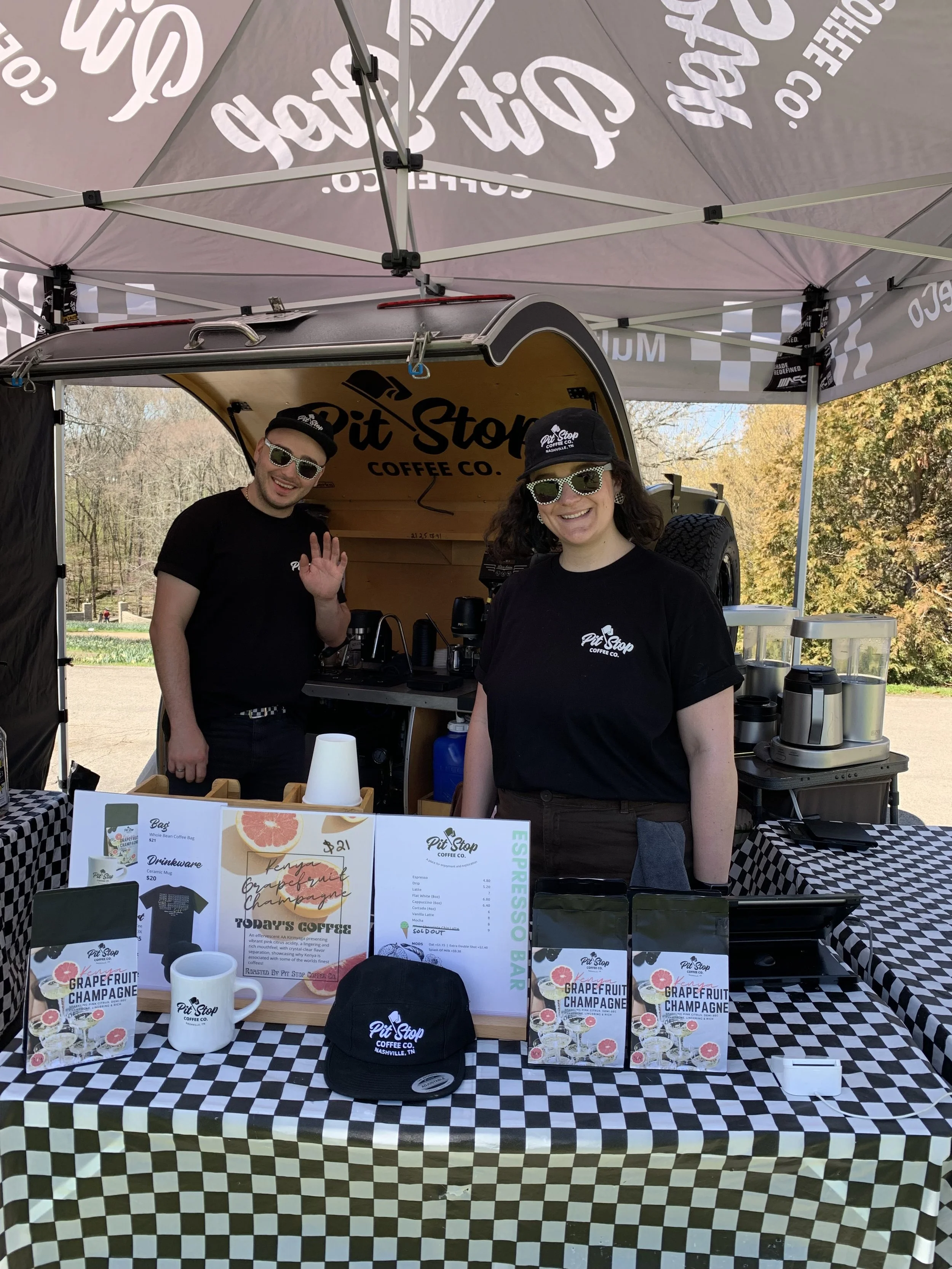
Instead, they found a used teardrop trailer on Craigslist and started trying to turn it into a coffee bar. More than a year of permitting problems and the unexpected start of COVID followed before they were finally able to open it up in Nashville and begin serving. Those early years became an education that would have been difficult to get any other way. Pit Stop introduced customers to coffees from roasters around the world that tasted dramatically different from the chocolatey, traditional profiles many people associated with coffee, and there was something incredibly satisfying about watching someone realize for the first time that coffee could taste like fruit, flowers, candy, or something they could not immediately explain.
The events themselves were relentless. Some required 20 to 30 hours of preparation, driving, setup, service, cleanup, and recovery for an event that might only last two or three hours, and there were plenty of times when the money barely justified the work. But the pressure of mobile service forced us to become better at solving problems.
Over time, the trailer became our testing ground for something that still shapes Pit Stop today: how do you make better coffee faster without making it worse? We refined recipes, equipment placement, preparation, movement, and workflow until one barista could operate the trailer at a pace that would normally require a much larger team while still brewing drinks to order.
That same trailer is still part of Pit Stop today, and our plan is for it to eventually live inside our Cookeville café as the espresso bar itself. It will not be there as a decorative relic from the early days. It will still be working, serving coffee as the thing that carried this idea from a Craigslist listing to an actual place of our own.
What’s With the 22?
When we eventually began roasting our own coffee, the same mentality followed us into the roastery. We were not interested in finding a roast profile that was simply acceptable, especially after spending years tasting what great producers and great roasting could make possible.
Sometimes that meant roasting twenty-two different versions of a single coffee (which we did 22 quite often on average) before finding the one that felt right. We kept adjusting, tasting, taking notes, and trying again because sometimes the difference between good and extraordinary is one more change, one more test, or one more willingness to admit that the last version still was not quite there.
The number 22 eventually became shorthand for that process. It reminds us to stay curious, keep testing, and not call something finished simply because stopping would be easier. You will see 22 on our bags, boxes, cups, and throughout Pit Stop because it represents the way we want to approach the work.
Connor & Chloe
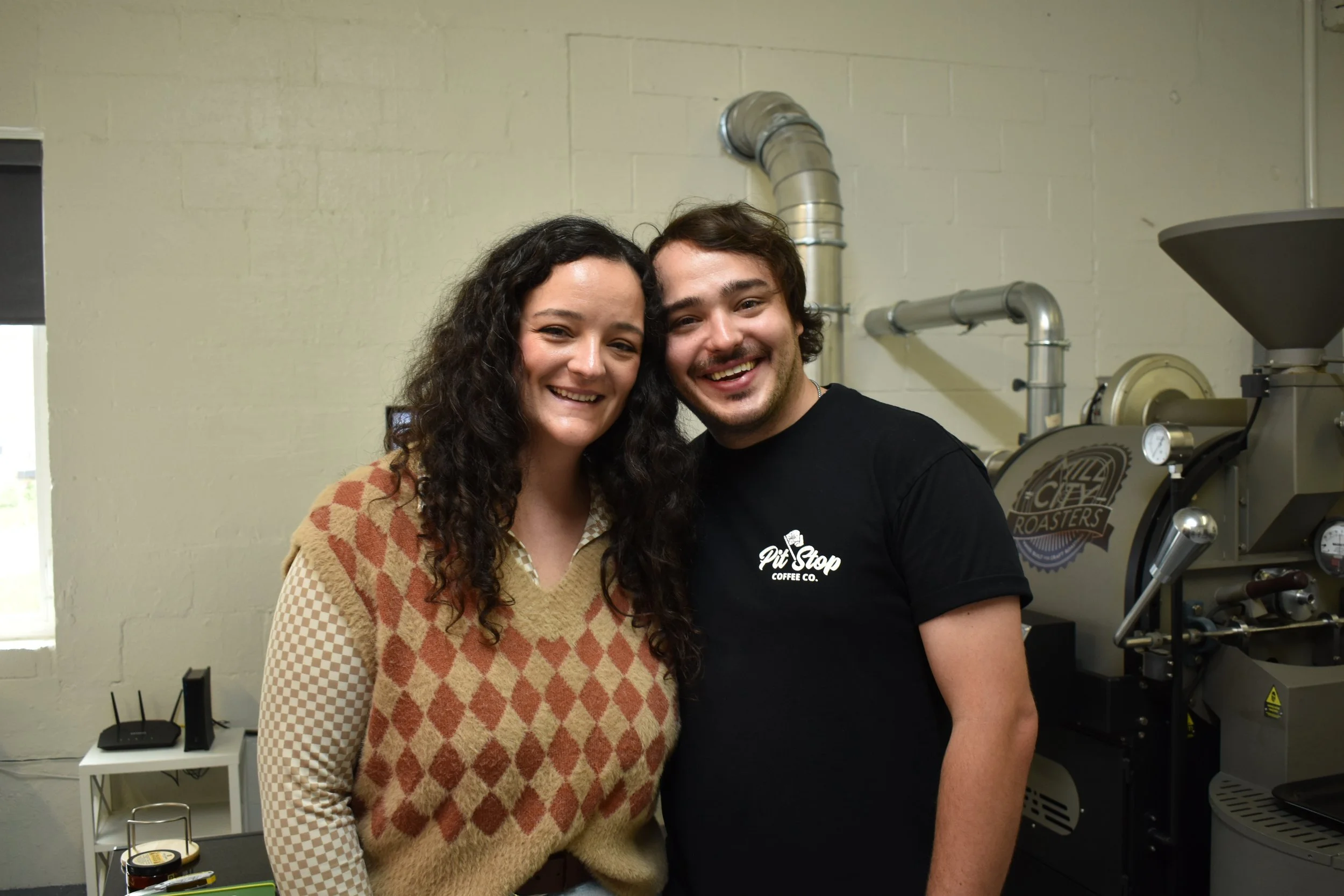
None of this was built by one person. Chloe has been part of Pit Stop through the events that barely broke even, the permitting battles, late nights, photography, branding decisions, roast experiments, operational problems, and nearly every strange stage a small business passes through while trying to become something real.
Her background in software engineering also shaped the way Pit Stop approaches problems. Where Connor naturally became consumed with coffee, equipment, roasting, and extraction, Chloe brought another layer of systems thinking alongside design and photography. In 2023, she left her own career to work on Pit Stop full time because they both believed there was something worth continuing to build.
After years of running mobile events, the workload eventually became unsustainable. Connor stepped back from operating the trailer full time and accepted a roasting position with the same Nashville company where he had previously worked as a barista, this time learning the other side of production on a vintage Probat UG22.
The lessons from the trailer never went away, though. One question in particular kept coming back: how do you serve dramatically more people without sacrificing quality, overwhelming the barista, or solving every operational problem by not just simply adding another person behind the bar?
That question eventually led to years of experimentation with espresso. Connor developed a system that could take an espresso shot that might traditionally require around 35 seconds and bring the extraction itself closer to 7 seconds while still producing something sweet, balanced, and enjoyable.
The speed was interesting, but the bigger lesson mattered more. A process everyone treated as relatively fixed could be reconsidered if you understood the equipment and variables deeply enough. That mentality now influences everything from how we roast coffee to how we design a bar, choose equipment, develop recipes, test water, and help wholesale partners improve their own systems.
The “SpeedSpresso” recipe is a nod to Turbo Shots but made in a very different way that’s unique to Pit Stop Coffee Co. After thousands of hours of testing we can say with certainty that it can beat nearly every otehr espresso in a blind taste test, showcase it’s natural origin flavor more through milk, and can significantly speed up workflow. By using our techniques, cafes could hire less and pay their staff more to retain experience and longevity in this industry.
The Next Stop
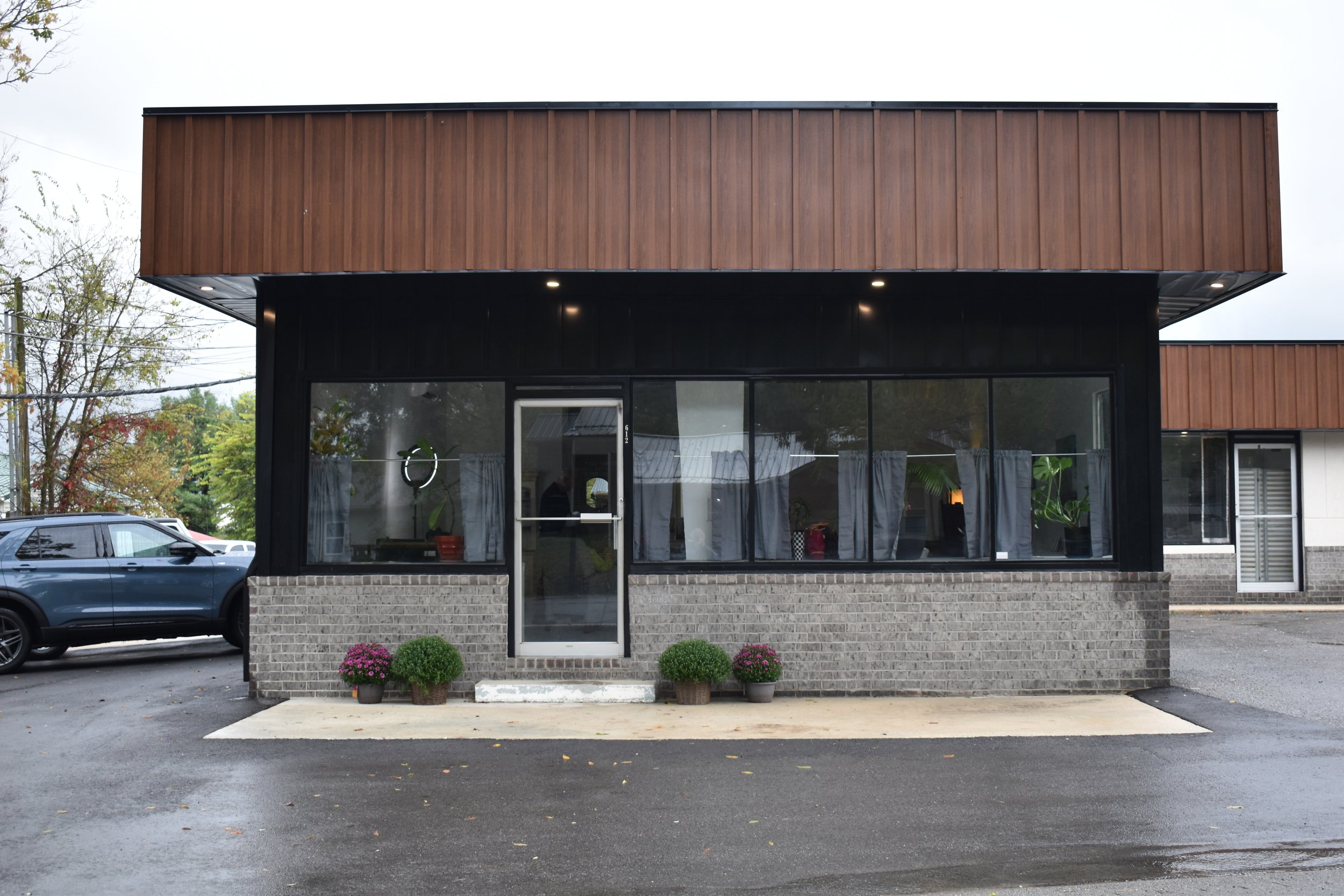
We are in Cookeville now, and for the first time Pit Stop has a permanent home. We bought a building, turned the back of it into our roastery, and are working toward transforming the front into the kind of café we spent years imagining while standing behind temporary bars, pulling trailers, setting up tents, roasting coffee, and asking how the whole experience could be better.
We want it to be a place for someone who already loves great coffee, but just as importantly, for the person who has no idea how interesting coffee can become. You should not need a vocabulary of processing methods, varietals, extraction theory, or roasting terminology to belong here. Curiosity is enough.
If you want to know why one coffee tastes like flowers and another reminds you of tropical candy, we want to show you. If you want to understand what fermentation changes, why water matters, or why we built a piece of the bar a certain way, we will happily talk about it. And if you simply want a really good drink without hearing any of that, we are happy to do that too.
After years of moving from place to place, Pit Stop finally gets to become an actual stop. A place where you can slow down for a minute, taste something you may not have experienced before, ask questions, watch the machinery work, and see what can happen when two people spend an unreasonable amount of time trying to understand how coffee can be better.
The Mission Underneath the Mission
The deeper we got into coffee, the more obvious another problem became. This industry depends heavily on skilled baristas, but many of those people are underpaid, stretched too thin, expected to perform inside poorly designed systems, and eventually pushed out after accumulating years of knowledge that is incredibly difficult to replace.
We believe better systems can help change some of that. If a café can reduce unnecessary movement, make espresso more consistent, eliminate avoidable mistakes, design equipment around the person using it, and allow a smaller team to accomplish more without constantly operating at the edge of burnout, that creates room to pay skilled people better and build jobs that talented people might actually want to keep.
That is why our obsession with equipment, workflow, water, recipes, roasting, and extraction is not only about chasing a better cup of coffee. We want to understand the entire Brewing Ecosystem well enough that quality, speed, consistency, hospitality, and a healthier way of working can support each other instead of constantly competing with one another.
That is what we have been building toward all along.
Pit Stop Coffee Co. | Cookeville, Tennessee
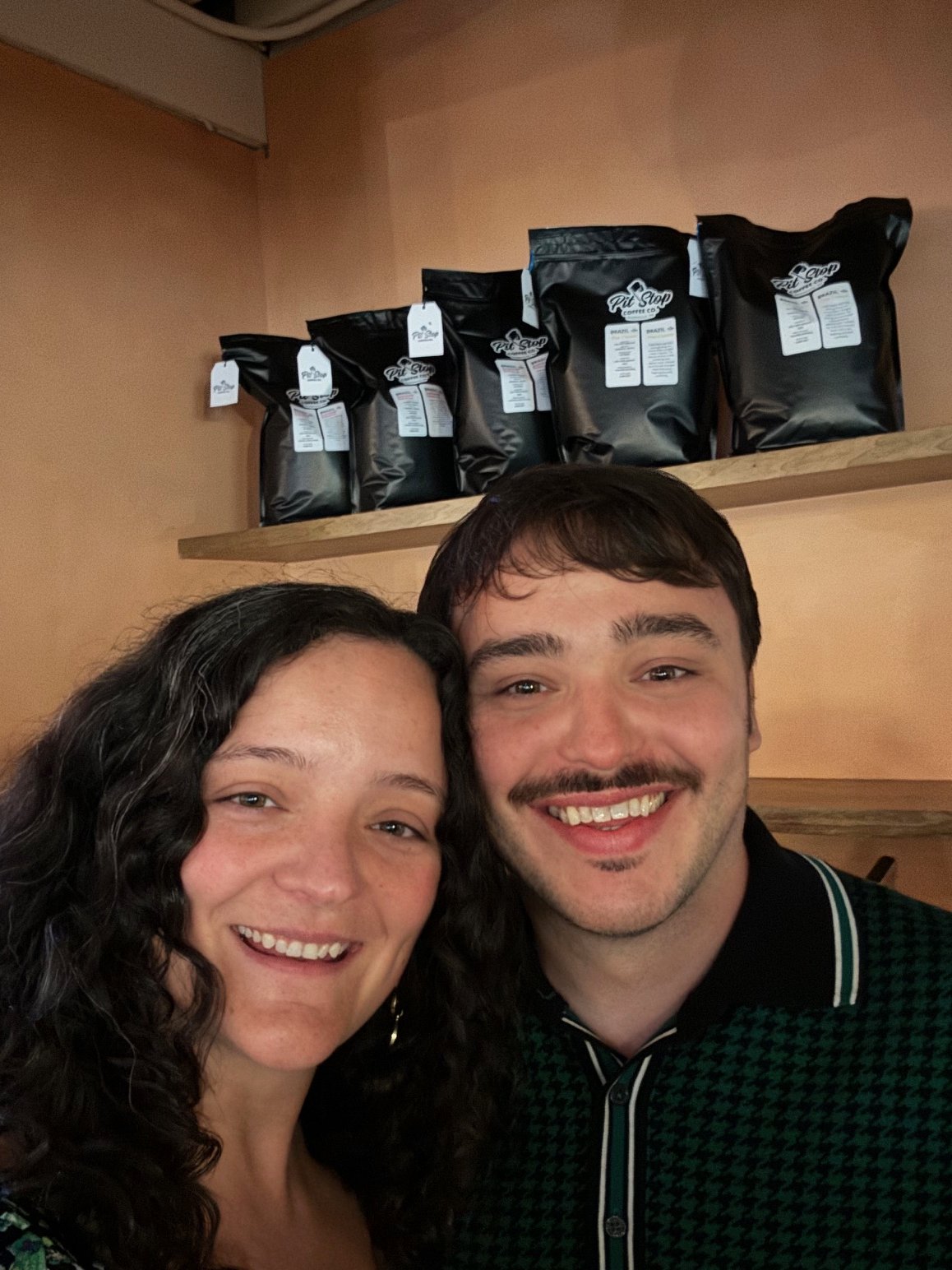
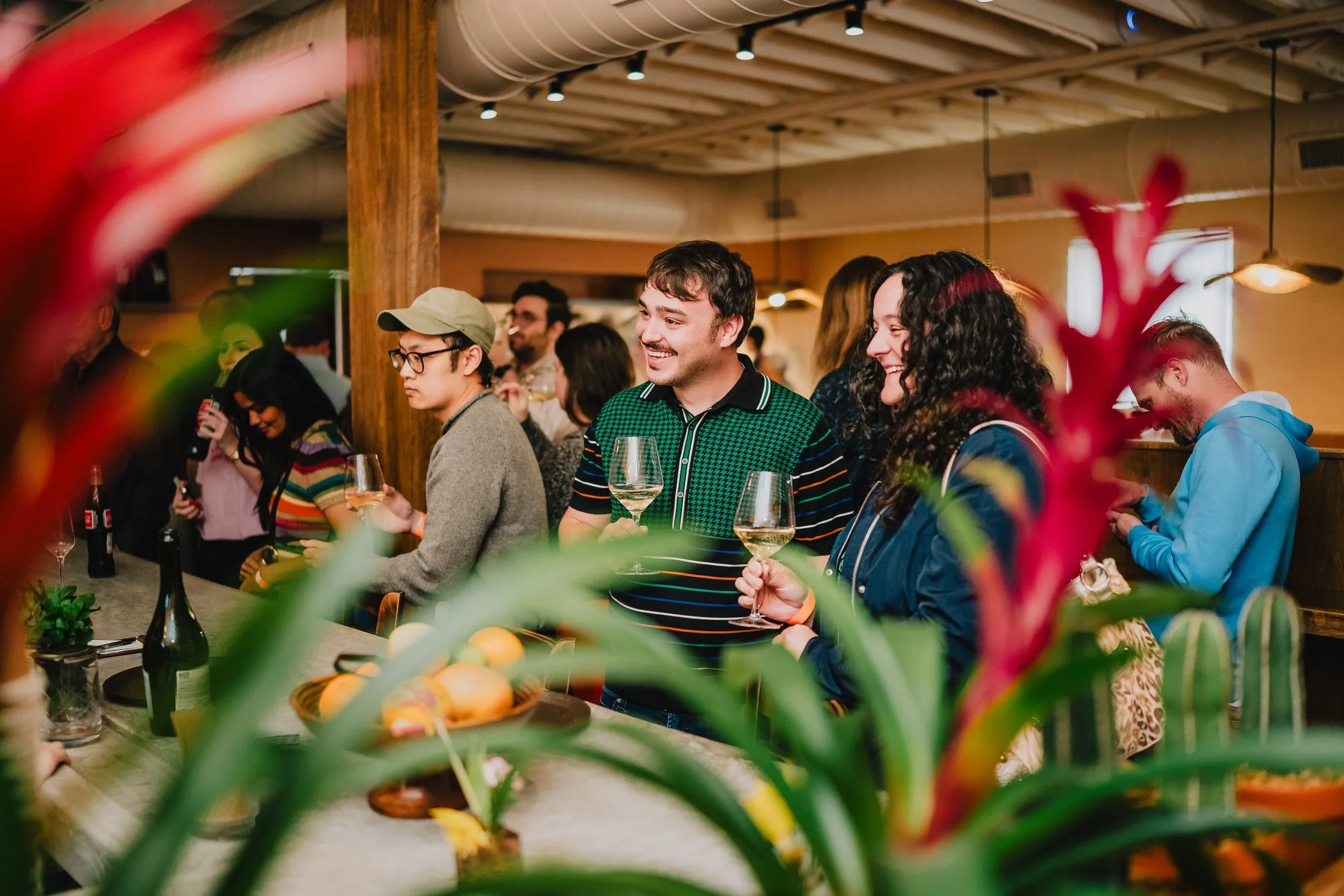
Enjoying a ticketed event at our first wholesale accounts (Tantísimo, Nashville) restaurant business. Seeing a lot of preparation and hard work of helping build out their coffee bar from scratch come to life!