About The Roast - The Starting Line Series 001
-
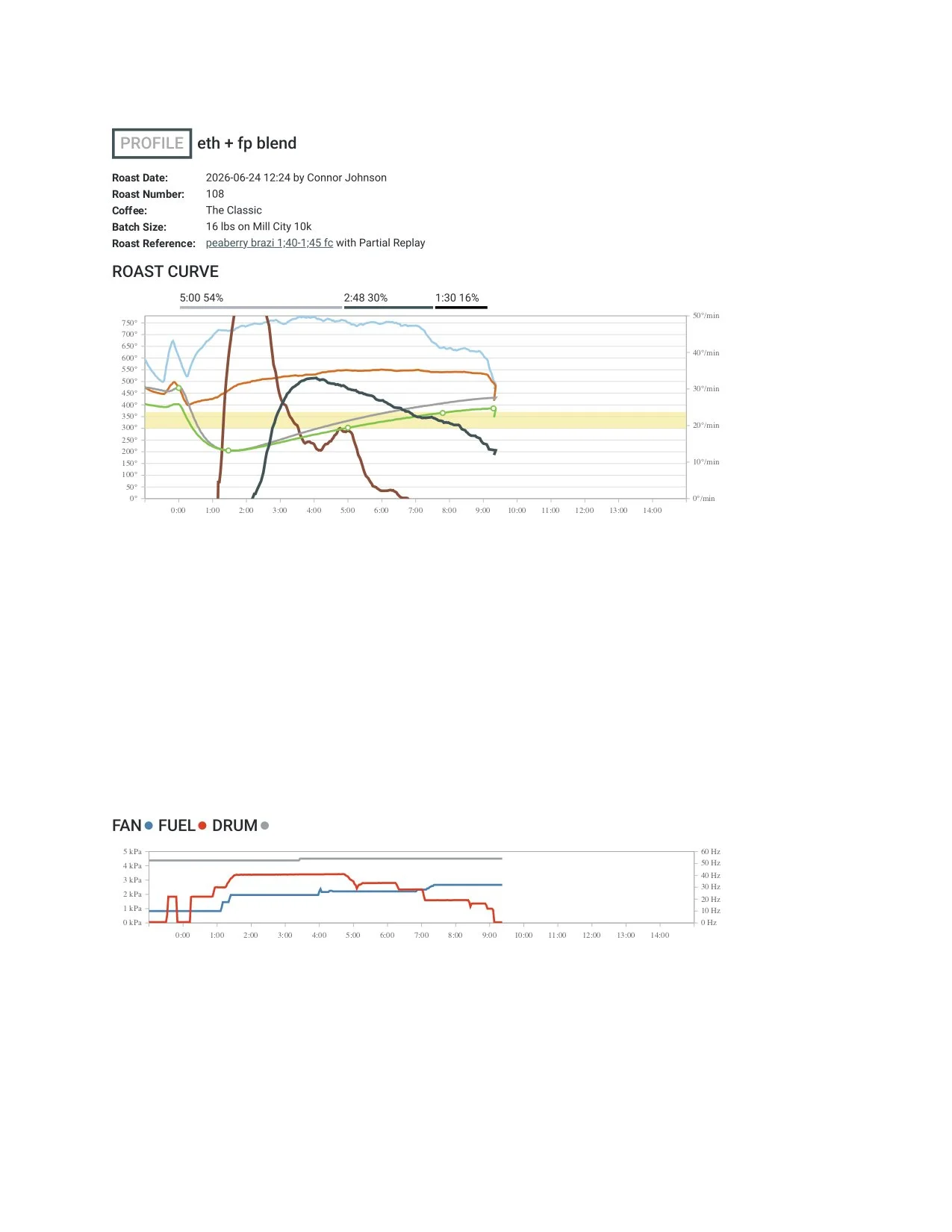
The prominent coffee in this blend comes from this roast. 50% of the final blend uses this profile. The goal here is to accentuate vibrant and sweet fruit notes of the Ethiopian Yirgacheffe Washed Grade 1 Gedeb Halo Beriti (containing 62.5% pre-roast) while also allowing the Flower Power (37.5% pre-roast) florals to shine. These coffees are fairly similar in size and are both small beans that absorb and release heat similarly, making them a great option to blend together.
The flavors of Jasmine, Honeydew Melon, and Lemon Candy in the final blend are from these coffees and this roast profile. Although this roast looks fairly delicate, it was an aggressive heating and cooling approach that led to an incredibly active first crack - also due to these small beans exothermic reactions being so easy to release heat.
Due to the aggressive cooling and small bean size, we had some beans in the chaff collector with this profile!
-
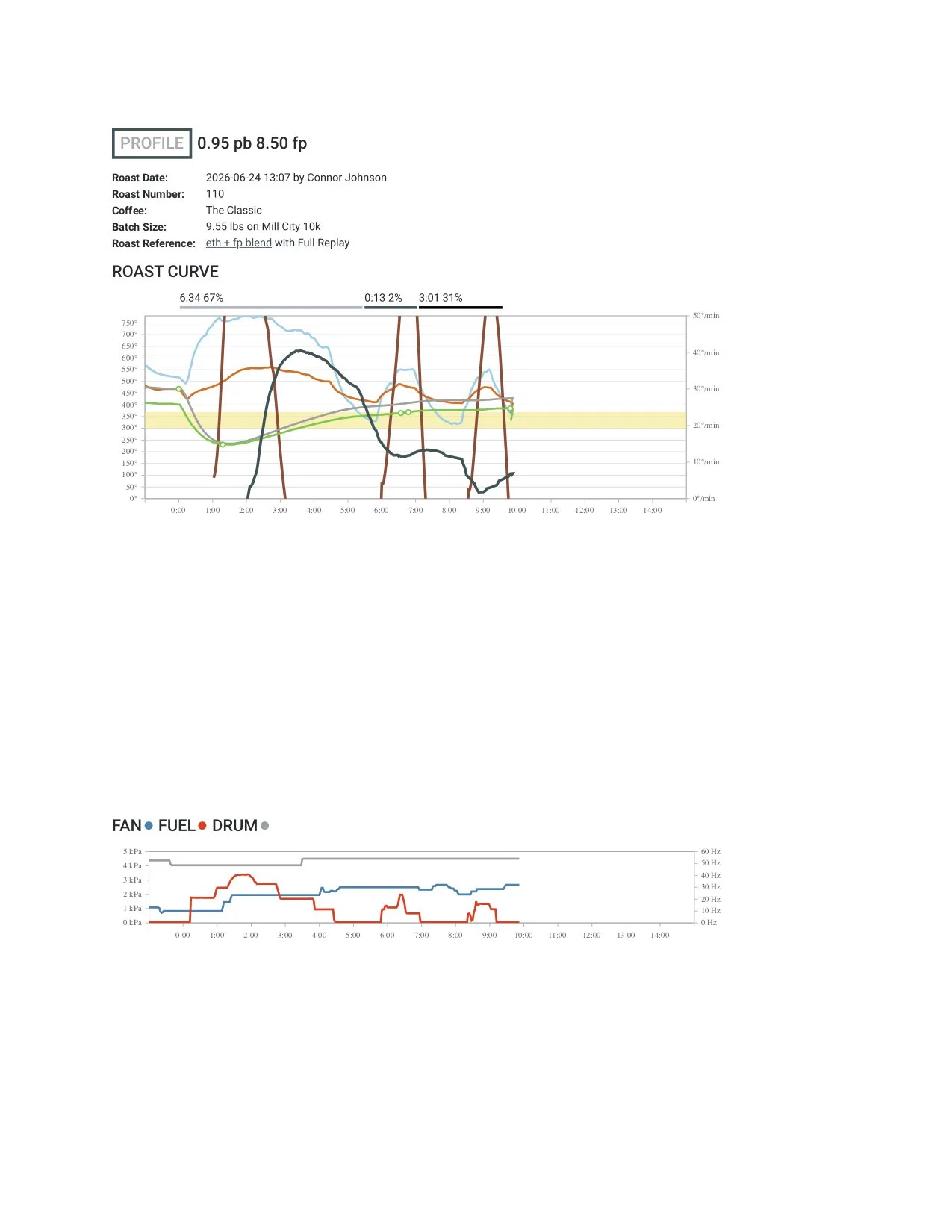
Welcome to the wackiest of profiles here. Any roaster would look at this and think this is a flawed profile. When testing out what roasts would work for this blend, this one stood out on the cupping table. We favored this one because of its highly unique bitter floral attributes. This is the reason for the lavender flavors in the final blend and possibly why the more “liqueur-leaning” flavors of walnut liqueur notes poke through.
I love thos roast so much for its ability to not taste like bitter chocolate but like bitter lavender. It also works as a pallet opener to perceive more flavors from the other components in the final blend.
This roast had a super small batch size which we used to get to maillard stage very quickly (please ignore the maillard stage marker) and then had a very slow rate of rise through first crack (without stalling the roast). I literally turned off the gas 3x during this roast - something I’d normally never do.
With this ultra high fan setting and heat adjustments, we were able to get through first crack and the beans naturally want to heat up afterwards, hence the ror flick at the end - this is typical for more developed roasting styles.
Our lowers ROR was in the later mid of first crack phase getting to 2-3 degrees before jumping up slightly towards the end.
What a wild and incredible component this adds to the blend! I’ve never tasted a blend this complex before, and I think this roast is a big reason!
-
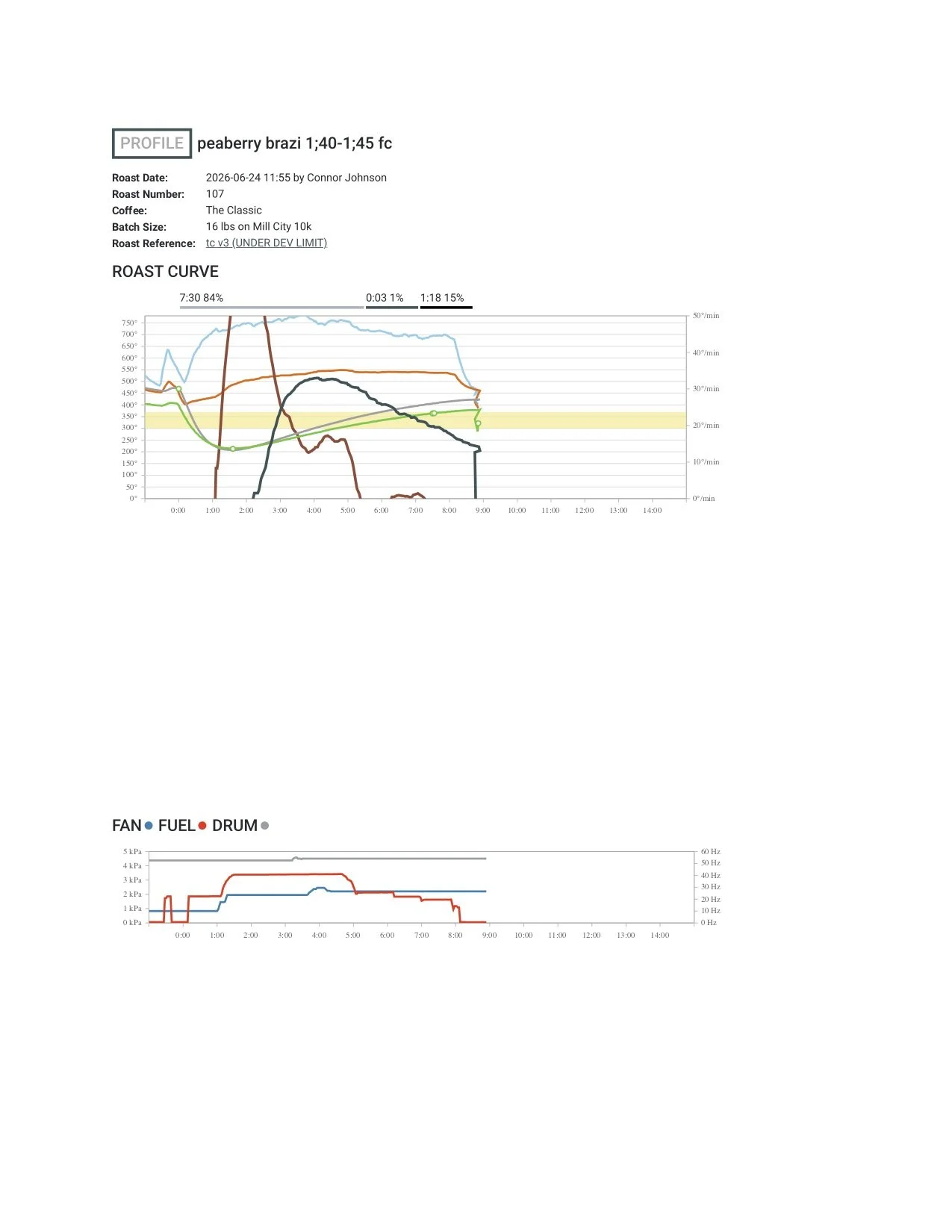
This is a typical roast I’d aim for with a Bourbon Peaberry from Brazil. Please ignore the maillard stage marking.
This coffee tastes incredibly sweet with like beautiful walnut vibrancy and a suuupppeerrr long lingering sweet aftertaste. There was tropical fruit juiciness and creaminess reminding me of mango and other yellow and orange fruits. These later notes remain mostly covered up in this blend but could be exaggerating the tropical/creamy honeydew melon note coming from the ethiopian.
This profile is a big reason the coffee has a rounded/full body and why theres much more complexity other than florals and fruit. It adds sweetness as well as improving the aftertaste flavor and lingering feeling.